
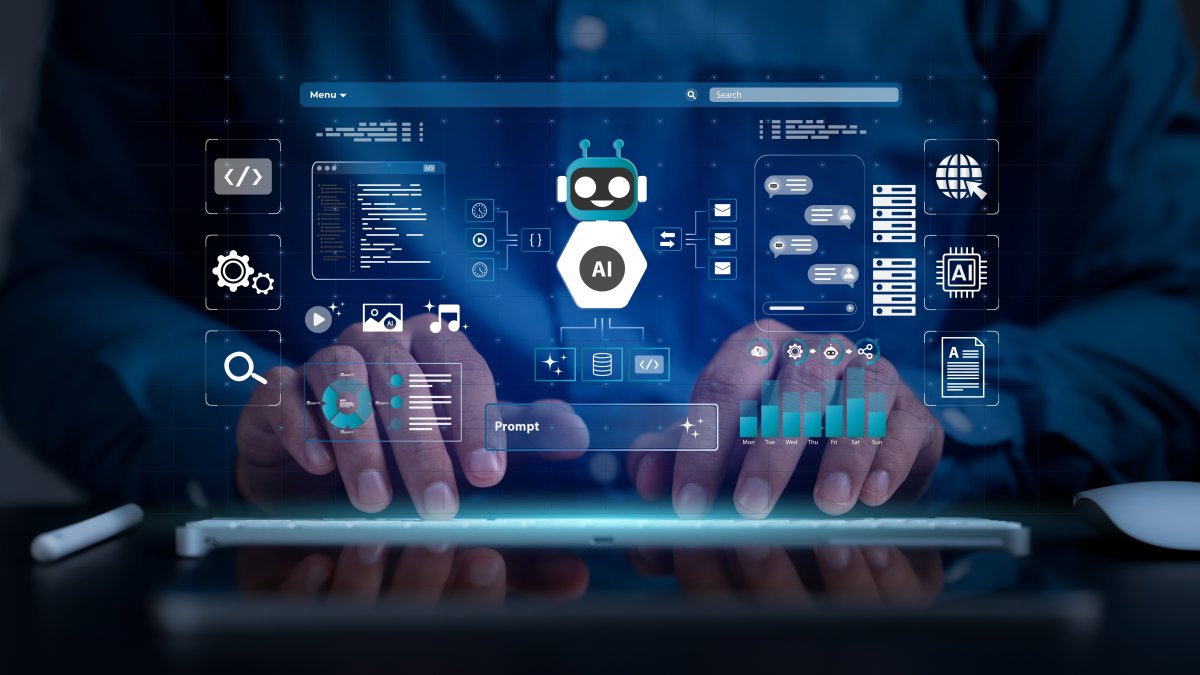
The world of technology is evolving from simple chatbots to “autonomous agents” that can perform complex tasks on their own. Since 2023, more than 500 startups have launched in this space, seeking to fundamentally transform the way businesses operate.
According to a recent report from CB Insights, as a new era begins in the artificial intelligence ecosystem, AI agents are no longer seen as experimental tools, but have become a strategic priority for companies around the world.
These agents work across a wide range of functions, from customer service to software development, and can plan, use memory, and manage tools without requiring human intervention. The report predicts that 2025 will be the year of “guardrailed agents,” systems designed to operate autonomously within defined boundaries while maintaining human oversight.
The rise of voice AI
Companies developing voice AI are gaining significant momentum as voice communication begins to replace text-based commands.
Voice agents, which can manage complex customer service and sales conversations without human intervention, are a new favorite among investors.
Meta's recent acquisitions in this space (Play AI and WaveForms AI) demonstrate increasing consolidation across the sector.
Software development is one of the earliest areas to commercialize AI agents. A trend called “vibe coding,” in which AI is given high-level goals and tasked with a multi-step coding process, is rapidly gaining momentum.
However, this development brought about a cost crisis.
In the model equipped with the “inference” function, the amount of tokens increases approximately 20 times, putting pressure on profit margins. This situation is forcing companies to move from a fixed pricing model to a pay-as-you-go pricing model.
Battle of the tech giants
Tech giants like Google, Microsoft, and Amazon are racing to build the infrastructure for this new economy.
Google is spearheading an “agent-to-agent” (A2A) protocol that enables communication between agents by building an ecosystem around the Gemini model.
Through its “Copilot” strategy, Microsoft is focused on integrating ready-to-use agent solutions into office software to accelerate enterprise adoption.
Meanwhile, Amazon provides infrastructure to developers through Amazon Web Services (AWS), while also investing heavily in consumer-facing agents and voice technology.
Can't be solved without trust
The CB Insights report emphasizes that AI agents are defined as not just efficiency tools, but “supertools” that fundamentally change the way companies operate. Organizations that manage this transformation correctly will shape the economy of the future.
However, risks such as the agent being “hallucinating” (producing false information) or behaving in unpredictable ways pose a significant threat.
As a result, a new “monitoring” market is emerging to monitor, audit, and secure agent performance. Companies strive to build trust through transparency and human oversight before deploying all-powerful agents.
Used technology platform Getmobile secures $22M investment
Turkiye's used electronics market, estimated to be worth around $8 billion, has long suffered from informality and a lack of standards, and is undergoing a technology-driven transformation.
At the center of this change is local startup Getmobile, which has raised $22 million in a Series A funding round with a vision of transforming the market into a “registered and scalable” model.
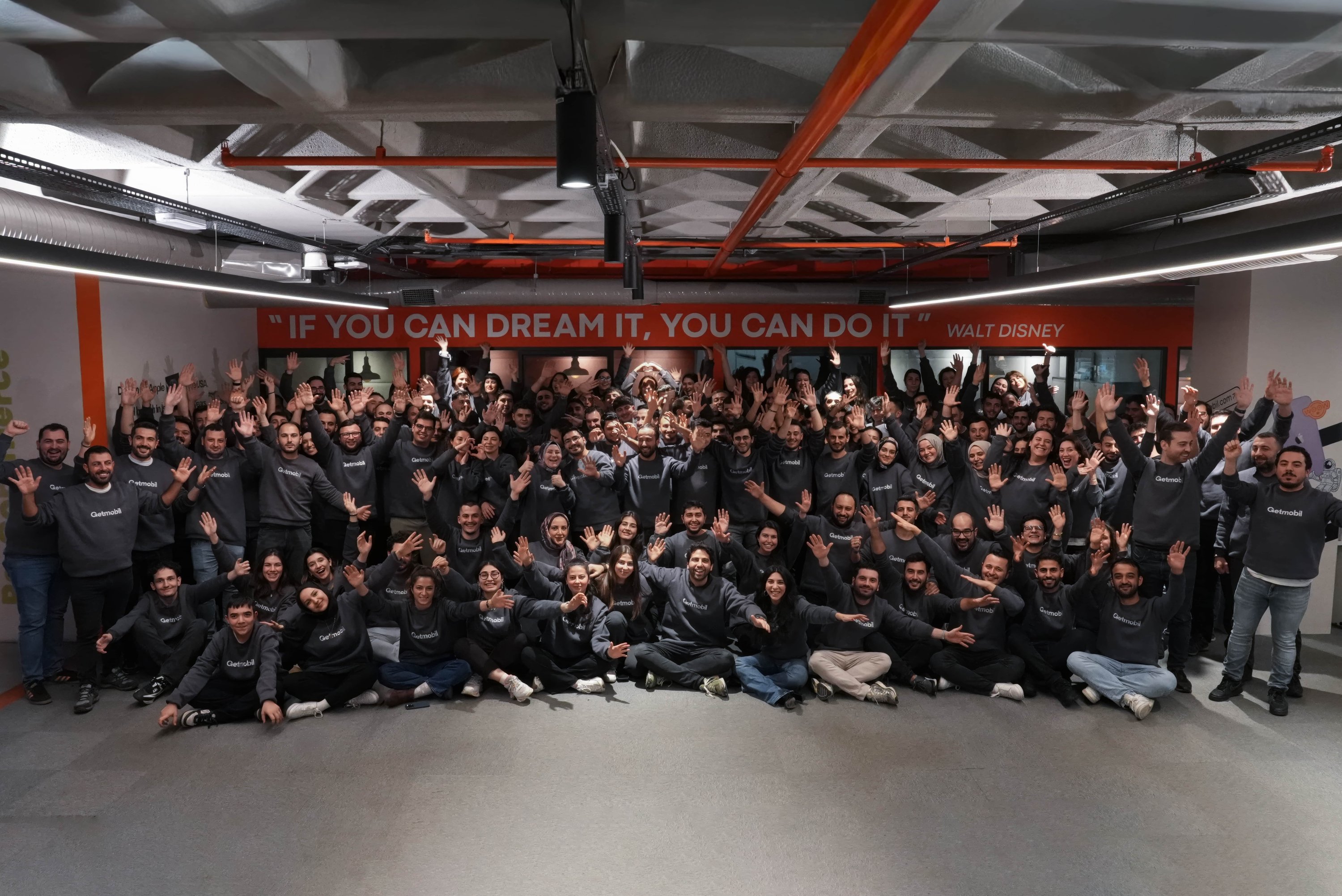
The investment, led by the International Finance Corporation (IFC), the private arm of the World Bank Group, and Lower Carbon Capital, known for its climate-focused funds, demonstrates growing global confidence in both Turkiye's regulatory environment and Getmobile's digital infrastructure.
Not just the marketplace
Unlike traditional used goods buying and selling platforms, Getmobile positions itself as an end-to-end technology platform. What fundamentally sets the company apart is its approach to existing retailers. Rather than kicking local retailers out of the system, we turn them into agents of change.
Getmobile is transforming a fragmented market into a converged network by building a digital operating system that connects more than 32,000 mobile phone retailers nationwide.
This infrastructure allows dealers operating in traditional ways to manage pricing, inventory, and refurbishment processes through data-driven tools. According to the company's data, dealers using Getmobile's system see a 60% increase in revenue and a 50% increase in inventory turnover.
Key Trade-in Program Partners
The trust and standardization created by this platform has also attracted the attention of global technology giants.
Getmobile is the infrastructure provider of choice for “trade-in” programs run by manufacturers such as Apple and Samsung, as well as major retailers such as Hepsiburada and Vatan. These partnerships allow consumers to turn their devices into cash through a guaranteed certification system.
Commenting on the investment, Getmobile CEO Mehmet Uygun said the company's ambitions extend beyond buying and selling devices.
“We are not just a market. We are building an ecosystem. To date, we have served more than 600,000 households. With this investment, our goal is to expand the system we have built in Turkiye and expand into international markets,” Uygun said.
With this funding, Getmobile aims to digitize the informal economy, strengthen local dealers, establish itself as a technology exporter from Turkiye and expand into global markets.
Asset tokenization startup Rudiq raises $1 million
Rudiq, one of the emerging startups in the digitization of real-world assets, is preparing to expand globally after raising $1 million in funding.
According to a report by Boston Consulting Group (BCG) and other financial research firms, the tokenization market is expected to reach $16 trillion by 2030, equivalent to a large share of the world's gross domestic product (GDP).
Financial giants such as BlackRock, JPMorgan and Citi are running pilot projects to tokenize assets ranging from bonds to real estate, an area that a growing number of people are calling the “future of markets.”
Rudiq, a fintech startup that provides tokenization and distribution infrastructure for traditional investment products, has secured $1 million in a funding round led by Simya VC, with participation from RePie VCIF and Savco Yatırım.
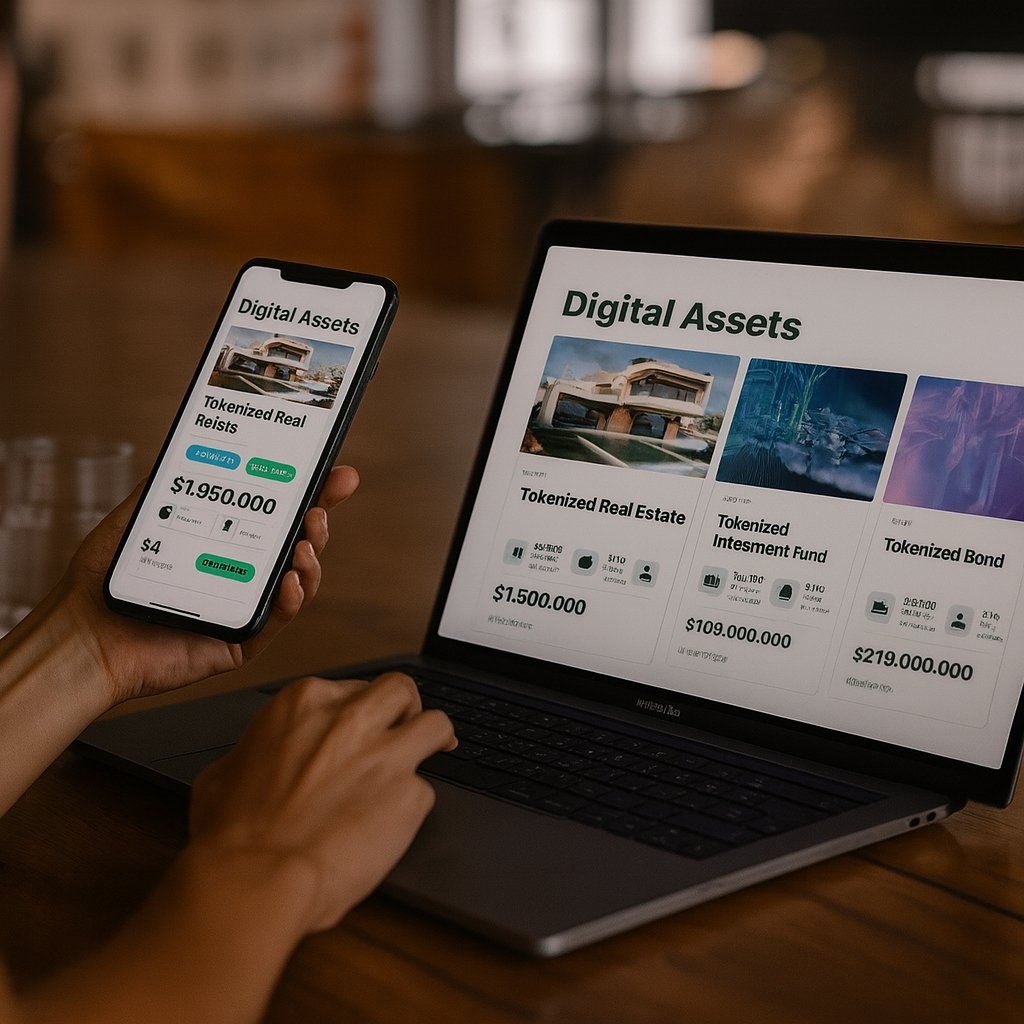
With this investment, the company aims to expand its blockchain-based solutions beyond the Turkiye market to the Middle East and US markets.
Mustafa Kemal Akıllıoğlu, co-founder and CEO of Rudiq, highlighted the ongoing structural transformation in the financial system and emphasized that the digitization of real-world assets is no longer just an innovation theme, but an inevitable infrastructure requirement.
wide range of solutions
Rudiq aims to connect investors and asset owners in the real estate sector through a secure and transparent infrastructure, providing securitization solutions across a wide range of asset classes including real estate, equities, fixed income, accounts receivable, precious metals and alternative assets.
With the new funding, the company plans to establish service provider organizations in the United States, Saudi Arabia, and the United Arab Emirates (UAE).
Rudiq also aims to obtain a brokerage license in the UAE and transform into a financial institution capable of issuing and distributing tokenized securities.
Selma Bahçıvanoğlu, Managing Partner of Simya VC, who led the investment round, said Rudiq stands out with an infrastructure that allows institutions to enter the digital asset space with confidence.
Bahçıvanoğlu added that the startup addresses a clear market need by removing technical and regulatory barriers, noting that the company's acceptance into major global accelerator programs such as Alchemist Accelerator is a strong validation of its potential.
Türk Telekom provides digital support from school to work
Türk Telekom, one of Türkye's leading telecommunications and technology companies, provides a comprehensive digital support ecosystem for students and professionals from fifth grade to adults through platforms such as JetDers, Vitamin and Türk Telekom Academy.
The global digital education market is gaining momentum. According to UNESCO and various market research reports, with widespread adoption of hybrid learning models, especially in the post-pandemic period, digital education will become a permanent part of the learning system, with the global edtech market expected to approach $400 billion by 2025.
As millions of students around the world increasingly opt for personalized, AI-powered learning modules, Türk Telekom is leading this transformation in Türkye with its robust technology infrastructure.
Türk Telekom continues to make technology and equal opportunities in education a reality with digital services that cover a wide range from primary education to professional life.
Support that understands students' feelings
Turk Telekom's latest educational offering, JetDers, stands out with its innovative structure designed for middle and high school students (grades 5 to 12). Providing vital support to students preparing for national exams such as LGS and YKS, the platform is updated annually to keep pace with curriculum and exam system changes.
What truly sets JetDers apart from other exam prep tools is its “intelligent systems” technology. By identifying the specific skills students are struggling with based on their responses, the system provides targeted questions and content designed just to strengthen those areas. JetDers helps students quickly close learning gaps and progress more effectively with interactive lessons that are much like one-on-one tutoring.
Targeted exam preparation
Another solution customized for middle school students is Vitamin LGS. This platform aims to provide learners with the advanced skills needed to solve the types of questions encountered on exams.
With skill-based questions and answers, a personalized smart learning system, and performance tracking features, Vitamin LGS has become an important companion for students through the rigorous exam process.
Career and skill development opportunities
Turk Telekom extends its educational support beyond the classroom, offering a broad development ecosystem for university students and professionals under the Turk Telekom Academy.
Through this platform, users can access career-oriented training programs, certification courses, and foreign language education. Delivered in collaboration with partner institutions through our Career and Career Plus packages, these programs help users enter the workforce better equipped with relevant skills and qualifications.


