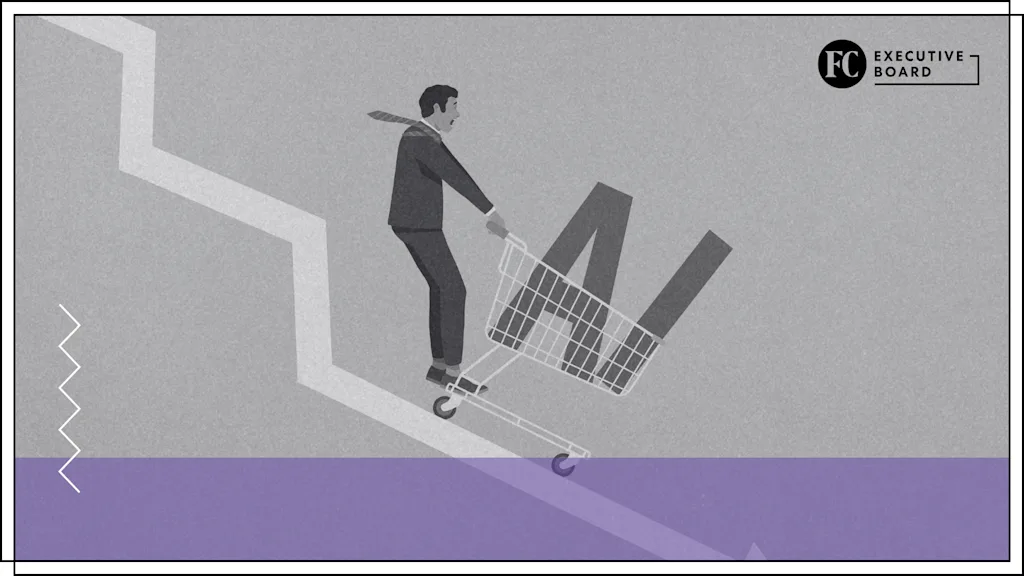
Artificial intelligence has gone from being a technical concept to one of the most overused terms in modern business. Every startup markets itself as “AI-powered,” every legacy tool claims to provide “AI-driven insights,” and every clunky customer service bot suddenly becomes an “AI assistant.”
The results are predictable. People are confused, skeptical, and increasingly convinced that this technology is overhyped.
When working with governments and businesses, I explain how modern AI can streamline regulatory compliance, improve documentation, and reduce operational burden. The most common responses I hear are “AI doesn't work” or “AI can't do that yet.”
For a while, I felt resistant to innovation. But over time, I realized that these leaders weren't denying real AI. They are rejecting unfortunate tools that are incorrectly labeled as AI.
Don't call it AI
Recent experience has made this observation clearer than ever. When I read that Panda Express was introducing AI ordering in their drive-thru, I decided to give the new system a try. What I encountered was not intelligence.
If I didn't say the menu items exactly as written, the system would freeze. It couldn't handle natural language, disambiguate substitutions, or interpret anything outside of its narrow script. The system followed preprogrammed upgrade prompts and stopped if the request did not match the expected pattern. It wasn't AI, it was a search function with a voice at the top, a rigid menu tree decorated with buzzwords.
Another example is the city of Dallas. For a period of time, an “AI chatbot” on the city's website attempted to help residents use city services. In reality, chatbots rarely load. Most days, the widget just displayed an error message. Eventually, the city removed it from the site.
Local government leaders can use real AI systems to streamline operations, but instead think of chatbots that don't work and are a waste of time. Business owners may be able to automate document creation and customer support, but remember the “AI assistants” that can be stilted and frustrate customers.
And when customers encounter a disappointing product, they think the problem lies with the AI itself. It's natural to be skeptical of AI when your first interaction is with a broken government chatbot or a fast food ordering system that can't understand your basic requests.
This failure was not due to the AI's inability to answer the municipality's questions. Today's language models can digest thousands of pages of ordinances, policies, and procedures and respond with clear explanations. The reason for the failure is labeling something as an AI that cannot perform at the expected level.
These situations are indicative of a larger trend. Companies will slap AI labels on everything they automate, even the basics. Scripted chatbots, strict rules engines, and decision trees are sold alongside systems that can interpret text, understand context, and generate original output.
Three reasons why fake AI is spreading
Several factors are at play in the cycle of AI hype and disappointment.
1. Marketing pressure: By calling your product AI-powered, you gain attention and trust from investors and the media. Teams use this term to sound modern, not to describe their actual abilities.
2. Fear: Organizations know they need to embrace AI. But instead of investing in the necessary data foundations, training, and system integration, organizations add superficial AI capabilities on top of their traditional infrastructure. They check the box for innovation, but don't get any meaningful results.
3. Misconceptions: Teams working on basic automation often mislabel tools as AI simply because they don't know the difference. And people believe AI is overhyped because the first thing they encountered was a mislabeled automated tool. There is a widening gulf of mistrust between what AI can actually do and what many people experience under the AI label.
We judge technology based on the version we experience, even if the label is wrong, rather than the version that actually exists.
The promise of real AI
The real problem is that most products today don't use meaningful AI. Real AI is already working in ways that many people have never experienced. AI can:
- Summarize long regulations in seconds.
- Analyze contracts, draft reports, and create complex documents.
- Uncover insights from large datasets.
- Power customer-facing chat systems that understand context and tailor responses based on user intent.
When used successfully, AI can eliminate repetitive tasks, improve service quality, and free up time for higher-value tasks.
The truth is simple. Used properly, AI refers to systems that can interpret information, learn from patterns, and produce useful output with context and flexibility. When organizations deploy real-world AI with clear goals and good governance, the results can be transformative.
The strongest case for AI comes from quiet, consistent results. A process that used to take days is now completed in minutes. Workflows that used to require multiple people now only require one person. Now you can instantly access information buried in thick documents.
Leaders who want to truly reap the benefits of AI must stop treating it as a buzzword and start treating it as infrastructure.
5 questions to improve your approach to AI
Organizations and leaders need to start asking better questions before putting the letters “AI” in a product description.
- What model is used?
- What data are they trained on?
- How is accuracy measured?
- How do systems learn or adapt?
- Can you explain to your users and employees how it works?
It also means being honest with your customers. When leaders abuse the AI label to describe simple scripts, it negatively impacts everyone’s adoption. If the tool is rule-based, label it as such.
If the AI features are limited or experimental, say so. People don't expect perfection, but clarity and transparency. Exaggeration breeds disappointment and mistrust.
If organizations want people to trust AI, they need to stop pretending they have it and start using it. Invest in real features rather than buzzword features, prototype rather than over-promise, and educate rather than confuse your users.
Only then will more people be able to experience what modern AI can truly offer. Only then will the word “AI” regain its meaning and value.
Chris Erhardt is a business and management consultant.
The extension deadline for Fast Company's World Changing Ideas Awards is Friday, December 19th at 11:59pm PT. Apply now.