

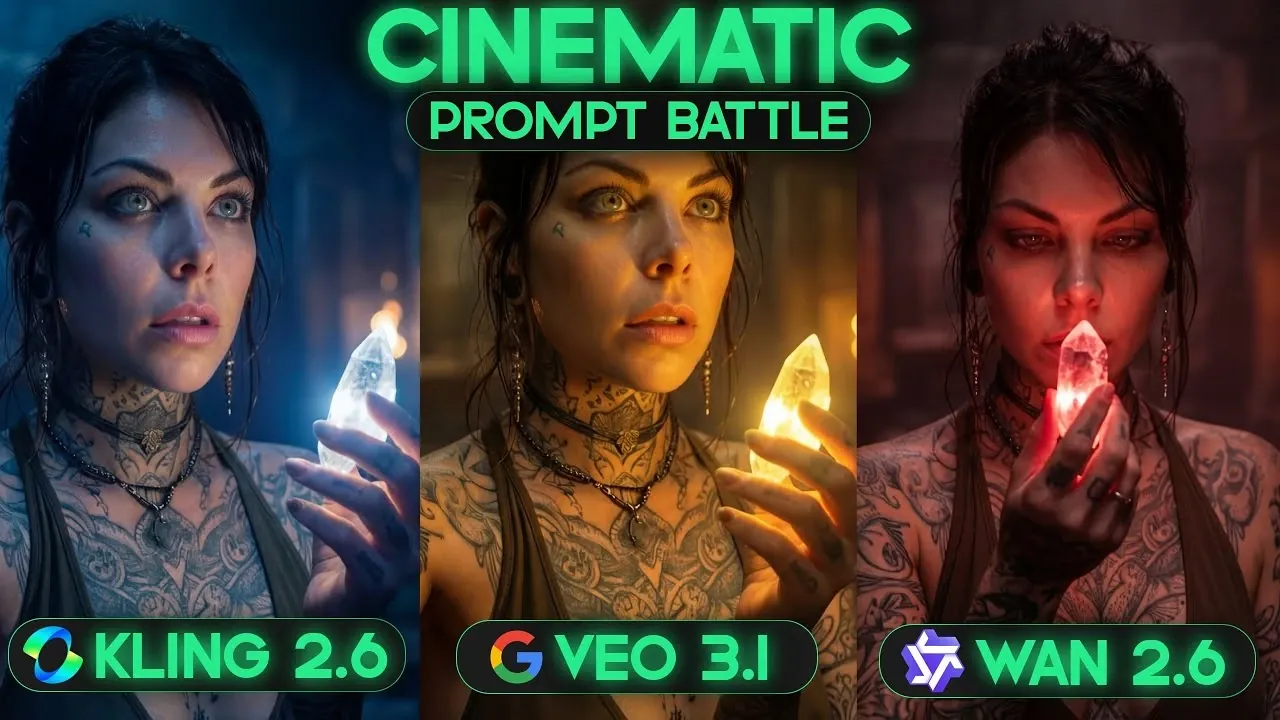
What really sets an AI video model apart? Is it lifelike speech synthesis, cinematic visuals, or seamless lip sync that brings characters to life? Below, CyberJungle analyzes the performance of three leading AI video generation models vying for dominance in this rapidly evolving field: Kling 2.6, Veo 3.1, and WAN 2.6. From the Kling's stunning visuals to the Veo's natural character interactions and the WAN's dynamic pacing, this comparison highlights both the exciting possibilities and unique challenges these models bring. Whether you’re an indie creator or a seasoned professional, understanding these differences is key to unlocking the full potential of AI-driven storytelling.
This comprehensive report explores how these models perform in key areas such as: speech synthesis, visual renderingand cinematic quality. Which one is better at creating emotionally resonant characters? Which one has trouble with audio clarity and textural consistency? And most importantly, which model best fits your creative vision? CyberJungle's analysis goes beyond technical details to examine real-world applications to provide actionable insights. By the end, you'll have a deeper understanding of how each model balances brilliance and imperfection, offering new possibilities for the future of AI-powered media.
A quick comparison of AI video models
Key points:
- AI video generation is transforming content creation, and Kling 2.6, Veo 3.1, and WAN 2.6 offer distinct strengths in areas such as speech synthesis, visual rendering, and cinematic quality.
- Kling 2.6 has excellent visual fidelity and cinematic rendering, but suffers from natural sound synthesis and fluidity of character movements.
- Veo 3.1 is a great choice for natural performances, accurate lip sync, and vibrant body language, but you may run into issues with camera angles and overlapping dialogue.
- WAN 2.6 prioritizes dynamic pacing and natural-sounding audio, but it lacks visual consistency, audio clarity, and overall quality compared to its competitors.
- Freepik complements AI video generation by providing tools such as image-to-video conversion, repair, and upscaling techniques to improve workflow efficiency and video quality.
Advantages and disadvantages
Each model has distinct advantages, but its performance varies depending on the specific requirements of the project. Below is a concise breakdown of their core strengths and limitations.
- Kling 2.6: Known for its exceptional visual fidelity, Kling 2.6 excels in areas such as lighting, rendering, and maintaining character consistency. However, its voice synthesis lacks the natural flow found in other models, and character movements can appear stiff. This model is ideal for projects where visual quality takes precedence over subtle character performance.
- Veo 3.1: Veo 3.1 stands out for its natural speech pacing, accurate lip sync, and lifelike body language. The attention to fine acting details such as subtle gestures and eye movements makes it perfect for character-driven stories. However, there may be issues with camera angles and, in rare cases, overlapping dialogue.
- WAN 2.6: WAN 2.6 provides dynamic pacing and natural-sounding audio in certain scenarios, but suffers from inconsistent textures, overly synthesized visuals, and weak audio clarity. Although it lacks overall quality compared to its competitors, it's great for projects where pacing is a priority.
Performance breakdown by use case
To determine which model is best suited for your project, it's important to evaluate performance across different use cases. Here we take a closer look at how each model behaves in specific scenarios.
- Monologue and dialogue: Kling 2.6 provides consistent framing and character consistency, making it a reliable choice for scripted content. However, Veo 3.1 surpasses that with natural pacing and superior lip sync, resulting in a more engaging and realistic performance.
- ASMR and sound effects: Both Kling 2.6 and Veo 3.1 provide high-quality audio clarity, essential for ASMR and sound-focused projects. WAN 2.6, on the other hand, suffers from voice inconsistency, making it less reliable for voice-intensive applications.
- Songs and music: Veo 3.1 outperforms the competition in music applications with advanced speech synthesis and precise timing. Kling 2.6 and WAN 2.6 cannot achieve the same level of realism and synchronization required for singing performance.
- Cinematic rendering: Kling 2.6 has excellent visual quality, offering great lighting effects and cinematic appeal. Veo 3.1 complements more natural character performances and is better suited for emotionally driven or character-focused scenes.
Kling 2.6 vs Veo 3.1 vs WAN 2.6: The ultimate AI video comparison

Learn more here AI video generation Browse a wide range of articles, guides, and tutorials.
Power your workflow with Freepik
For creators looking to optimize their workflows, platforms like Freepik offer valuable tools to complement AI video generation. By integrating with models like Kling 2.6, Veo 3.1, and WAN 2.6, Freepik powers your creative process with features designed to improve efficiency and quality. The main features are:
- Image to video conversion: Quickly and easily transform static images into dynamic video content, reducing production time.
- Repair tools: Refine your video frames by fixing imperfections or seamlessly adding new elements for a polished final product.
- Upscaling technology: Enhance video resolution and realism to deliver professional-grade results that meet high quality standards.
Freepik's versatility makes it an essential resource for creators looking to adapt to diverse project requirements while maintaining a streamlined workflow.
Choosing the right model for your needs
Choosing the best AI video generation model depends on your project-specific priorities. If your primary focus is on achieving exceptional visual fidelity and consistent framing, Kling 2.6 is a strong candidate. For creators who prioritize natural performances, detailed character interactions, and realistic body language, Veo 3.1 emerges as an outstanding choice. WAN 2.6 may be less versatile than its competitors, but it's still a viable option for projects that value pace over practicality.
By incorporating tools like Freepik into your workflow, you can further enhance your creative capabilities and seamlessly integrate multiple AI tools to achieve your vision. With the right combination of technology and strategy, you can improve your content creation process and create videos that captivate and engage your audience.
Media credit: CyberJungle
Filed Under: AI, Guide
Sale on the latest geeky gadgets
Disclosure: Some articles contain affiliate links. If you buy something through one of these links, Geeky Gadgets may earn an affiliate commission. Learn about our disclosure policy.


