
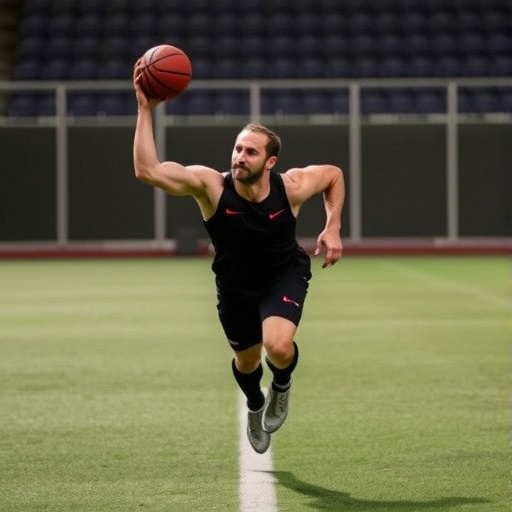
In groundbreaking research that redefines the landscape of sports science, Zhou T. presents a pioneering machine learning algorithm specifically designed for the assessment of athletes' psychological qualities. As sports performance increasingly depends not only on physical ability but also on mental strength, this research promises to provide coaches and trainers with a valuable tool to optimize athletic performance. This research paves the way for a more holistic approach to athlete training by integrating advanced computational methods and psychological assessment.
The core of Chou's research lies in the advanced nature of the machine learning algorithms utilized. After collecting extensive data from elite athletes in various sports, Chou implemented deep learning technology that analyzes not only performance metrics but also psychological metrics. Traditional training plans often overlook the subtle effects that mental health has on athletic performance, but this innovative approach helps fill that gap. The algorithm assesses an athlete's mental state by assessing factors such as anxiety levels, motivation, and focus, providing important insight into how these factors impact overall performance.
The application of machine learning in sports is not entirely new. However, Zhou's algorithm is distinguished by its specificity and adaptability. While previous models provided extensive analysis, this study focuses on personalization. By taking into account individual differences and situational factors such as competitive pressure and personal history, the algorithm can tailor training interventions to each athlete's unique psychological profile. Coaches will therefore be better able to devise strategies that focus not only on improving skills, but also on developing a resilient mindset.
One of the most appealing aspects of Chou's research is his commitment to empirical validation. The study included a rigorous testing phase in which the algorithm was applied to a real-world training environment. Athletes underwent psychological evaluations before and after implementing machine learning assessments, which resulted in significant improvements in performance metrics. The report shows that athletes who received customized psychological coaching based on algorithmic insights significantly improved their competitive performance.
Moreover, this algorithm has implications beyond performance gains. This study proposes that highlighting the interplay between psychological and physical preparation changes how athletes perceive their training plans. This study promotes a paradigm shift in athletic development strategies by positioning mental fortitude as fundamental rather than a supplementary aspect of training. This encourages athletes to view psychological health as an essential element of their overall training.
In the field of competitive sports, coaches face the difficult task of keeping athletes not only physically healthy but also mentally sharp. Zhou's innovation addresses this challenge head-on, providing a robust framework that provides coaches with the insights they need to more effectively monitor and support the mental health of their athletes. This is particularly pertinent given the growing awareness of mental health issues in sport, which can lead to burnout and performance-related anxiety.
The potential applications of this research extend to other areas as well. Although primarily tailored for athletes, the principles underlying Zhou's machine learning algorithms may also be relevant in corporate environments, educational institutions, and various high-pressure professions. With a better understanding of psychological qualities, industries can implement similar frameworks to improve employee well-being and productivity.
As organizations seek innovative ways to improve performance, Zhou's research proves that technology's ability to analyze human performance is evolving. As artificial intelligence and machine learning become more proficient, the sports world is poised to leverage these advances in surprising ways. Leveraging data-driven insights not only enables improved performance, but also contributes to an athlete's overall health.
Ethical considerations also need to be considered when introducing such technology into sport. Coaches and trainers need to be well-educated about the responsible use of psychological data and ensure that athlete privacy is respected while leveraging these insights. Chou advocates a framework that embraces open communication, emphasizing the need for athletes to fully understand how their psychological profiles are being used and to ensure they provide informed consent.
Additionally, continued research is essential to continue improving these algorithms. As machine learning models grow through repeated improvement and more data is collected from diverse athletic populations, the algorithms may become more applicable to different sports and levels of competition. This may provide a more comprehensive understanding of the psychological nuances that influence athlete performance, which in turn may facilitate the emergence of new, targeted training approaches.
In conclusion, Zhou T.'s machine learning algorithms present an exciting frontier at the intersection of technology and sports psychology. By prioritizing the psychological aspects of athlete training, this study paves the way for more nuanced and individualized coaching strategies that take into account the complexity of athletic performance. As the sports community begins to embrace these innovations, the potential for improved performance outcomes and improved athlete health is clear. The future of training is brighter than ever, promising a holistic approach that harmonizes mind and body in the pursuit of excellence.
As we look forward to the broader impact of this research, it is clear that Zhou's research is setting the stage for a new era in sports science. Integrating machine learning into the assessment of psychological attributes will not only transform the way athletes are trained, but also the way we understand the mental aspects of performance in competitive sports.
Research theme: Machine learning algorithms in sports psychology
Article title: Machine learning algorithms to assess the psychological quality of athletes and optimize their training
Article referencesIn: Zhou, T. Machine learning algorithms to assess athletes' psychological quality and optimize training. Discob Artif Inter (2025). https://doi.org/10.1007/s44163-025-00537-w
image credits:AI generation
Toi: 10.1007/s44163-025-00537-w
keyword: Machine learning, sports psychology, athlete performance, psychological quality, training optimization.
Tags: Advanced Computational Techniques in TrainingAI Assessment of Athlete's Mental StrengthAthlete Anxiety LevelDeep Learning Techniques for PerformanceFocal Assessment for AthletesA Holistic Athlete Training ApproachInnovative Sports Science ResearchMachine Learning in Sports TrainingMental Health and Athletic PerformanceMotivation Factors in SportsOptimizing Athletic Performance with AIPsychological Assessment of Athlete


