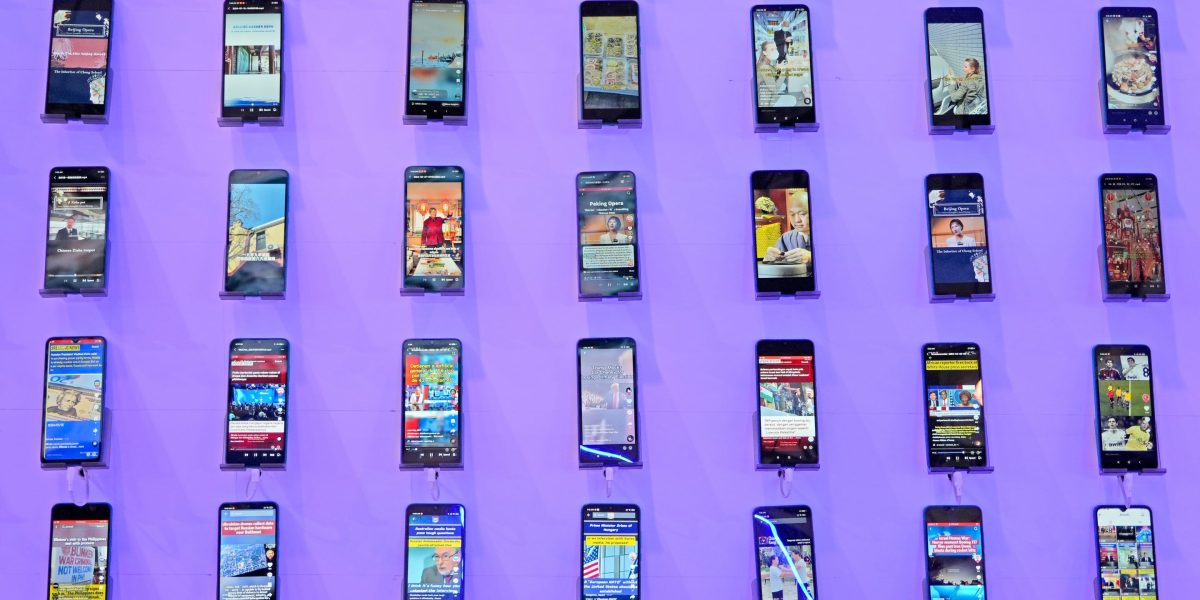
At the Asia-Pacific Economic Cooperation Conference in South Korea in October, perhaps the most important diplomatic gathering in the region, the Tiktok logo appeared everywhere. The videos touted the social media platform’s ability to empower creators, and there was a constant stream of short videos at the exhibit booth. TikTok executives on stage highlighted the billions of dollars their platform generates in Asia and pledged to build a “trusted digital ecosystem.” Participants received a TikTok-branded baseball cap as part of their swag bag. At a private lunch on the shores of Bomun Lake in Gyeongju, TikTok creators praised the platform that has brought them hundreds of millions of viewers.
Lissi Avila, a Filipino singer who became a hot topic on TikTok, told the assembled audience, “I found life on TikTok when I became a single parent…I had to find a way to support my son.” “TikTok made everything easier…it became a lifeline.”
But the real action surrounding TikTok was taking place 80 miles south in Busan, where U.S. President Donald Trump and Chinese President Xi Jinping were embroiled in a debate over the future of U.S.-China trade and potentially the fate of TikTok’s U.S. operations.
U.S. officials have long warned that TikTok’s Chinese ownership gives the Chinese government access to U.S. user data and the power to interfere in U.S. affairs by tweaking the social media platform’s algorithms. Those concerns prompted Congress last year to pass the so-called Divester Ban Act, which threatened to ban TikTok from U.S. app stores unless owner ByteDance sold the app.
In September, U.S. authorities announced that a consortium of U.S. investors would buy TikTok’s U.S. division, saving the app’s U.S. operations. Shortly after the meeting between Mr. Xi and Mr. Trump, Treasury Secretary Scott Bessent said China supported the plan. (Beijing gave a more lukewarm response, saying it would work with the US to “appropriately resolve” issues related to the app).
The Trump administration touted the TikTok deal as a victory for Zhang Yiming and his friend Liang Rubo, who rented an apartment in Beijing’s high-tech district Zhongguancun and launched hit news aggregator Toutiao. But it wasn’t until ByteDance launched short-form video platform Douyin in 2016 and Douyin’s international sister app TikTok a year later that it became the global tech giant it is today.
“ByteDance is the only Chinese company that is successful in both consumer applications and enterprise AI adoption.”
Tony Peng, China AI Analyst
TikTok currently boasts over 1.5 billion monthly active users worldwide. Along with that, ByteDance’s fortunes ballooned, reaching a valuation of $400 billion and at one point making it the world’s most valuable startup.
Now, ByteDance is thinking about its next big strategy: AI. The Doubao chatbot debuted in August 2023. It comes 10 months after the launch of ChatGPT and is similar to OpenAI’s core offering in that it can answer questions, perform searches, and generate images and videos. (ByteDance provides access to its AI models to other companies through its Volcano Engine platform.) With 157 million monthly active users, Doubao is the most used AI app in China. “In October, a ByteDance executive said the following about AI adoption in the average application and enterprise,” said Tony Peng, who writes about China’s AI space.
If both sides approve TikTok’s U.S. sale, a U.S.-based joint venture would take over TikTok’s U.S. operations, likely by the Jan. 23 deadline. ByteDance will maintain less than 20% stake in the new company. The remaining shares will reportedly be divided between ByteDance’s current U.S. investors, including venture firm General Atlantic, and new entrants including Oracle and Silver Lake Management.
Vice President J.D. Vance claimed that TikTok’s algorithm is “American-run” and that the app’s U.S. division will be sold for a relatively small sum of $14 billion. However, recent media reports suggest that the algorithm will remain owned by ByteDance, and that the new TikTok US could pay a hefty license fee to the Chinese company, equivalent to half of TikTok’s US profits.
ByteDance does not disclose financial results and declined to comment for this article, but media reports say the company has sales of $155 billion, with nearly $40 billion of that coming from outside China. ByteDance’s U.S. revenue is estimated at around $15 billion. Overall, ByteDance reportedly made $33 billion in profits last year.
ByteDance may use the proceeds from the sale of TikTok US to maintain its AI advantage.
The company’s large-scale language model is not necessarily the most powerful in China’s AI ecosystem. That praise is usually given to models released by AI startups like DeepSeek, Alibaba, or Moonshot AI. “ByteDance’s strength lies not in traditional text LLMs, but in images and visuals,” said Grace Xiao, an analyst in China’s AI sector. The company is integrating its generative AI services into TikTok and its video editing app CapCut, allowing users to leverage the technology for their content. (ByteDance researchers won the 2024 Outstanding Paper Award at NeurIPS, also known as the “Olympics of AI,” for discovering a more efficient way to generate images.)
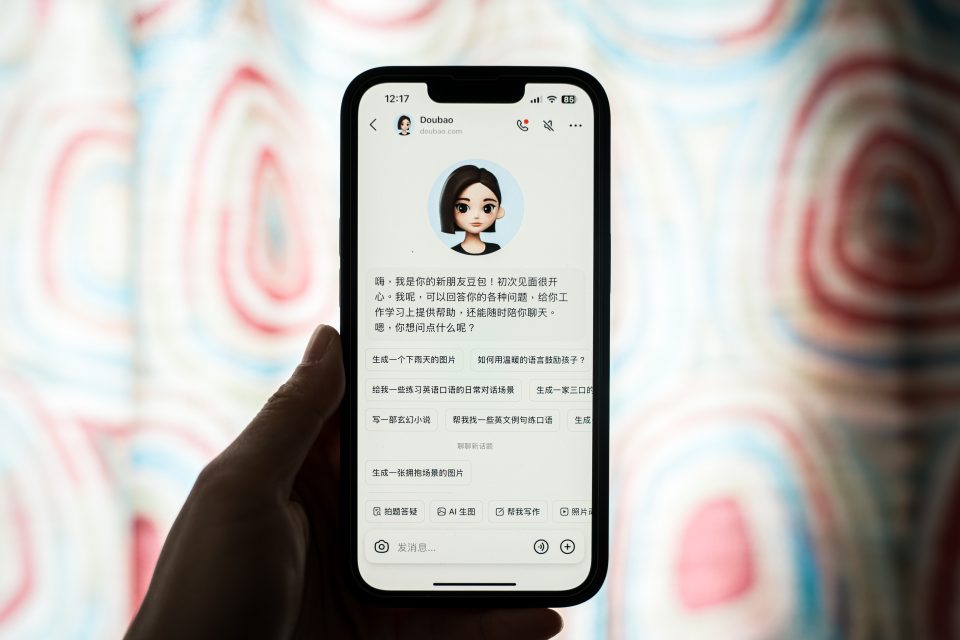
Ram Ik—Bloomberg/Getty Images
In other words, DeepSeek and Alibaba aren’t the only direct competitors for ByteDance, Xiao said. That’s live streaming giant Kuaishou, whose Kling image and video generation service was sometimes the best in the world.
To stay ahead in the AI race, ByteDance needs access to powerful AI chips. ByteDance is the largest purchaser of Nvidia chips in China and is considering designing its own processors, according to media reports. The company is also investing in data centers in regions such as Latin America and Southeast Asia.
All these efforts add up. Reuters reported in January that ByteDance plans to spend more than $20 billion in capital expenditures in 2025 (a report the company called “incorrect”). ByteDance competitor Alibaba has pledged to spend more than $50 billion on AI over the next three years. (U.S. capital spending even dwarfs that, with Alphabet projecting $93 billion in spending in 2025 alone.)
At the same time, ByteDance is offering its models at very low prices to beat out its rivals. Customers of ByteDance’s base model pay 2.6 yuan (37 cents) per million tokens. Access to DeepSeek, on the other hand, costs approximately 42 cents per million tokens.
Also, unlike big tech companies Alibaba and Tencent, ByteDance is privately held and cannot tap the public markets to raise capital. A deal with TikTok US could have the added benefit of unlocking ByteDance’s long-desired and long-delayed IPO.
ByteDance was late to join China’s AI race, but even more latecomer DeepSeek set all competitors on fire in January when its model, built by a small lab and trained with far fewer resources, matched ChatGPT’s capabilities.
$400 billion
ByteDance’s estimated valuation was once the highest among startups.
157 million
Doubao is the top AI app in China by monthly active users.
30 trillion
The average number of tokens (or units of data) processed by Doubao per day more than doubled in September 2025.
Source: Media Report
“Deep Seek was not only a wake-up call to the West, but it was actually a wake-up call to China,” Xiao said. China’s big tech companies had become content with “sitting on a hill and just cruising around in commerce, social media, etc.”
Now, companies like Alibaba, Baidu, and Moonshot AI are releasing more powerful models and open-source models that allow developers to experiment with the models themselves.
Whatever ByteDance decides to do with AI, it’s likely to be done unnoticed, at least at first. “ByteDance is not a company that starts out with a lot of hype,” Shao says. “They really wait until the product is mature enough to launch.”
ByteDance needs money and focus as AI transforms China’s technology sector. Resolving the TikTok US issue could benefit both parties.
This article was published in the December 2025/January 2026 Asia issue. luck The headline is “ByteDance without Tiktok.”