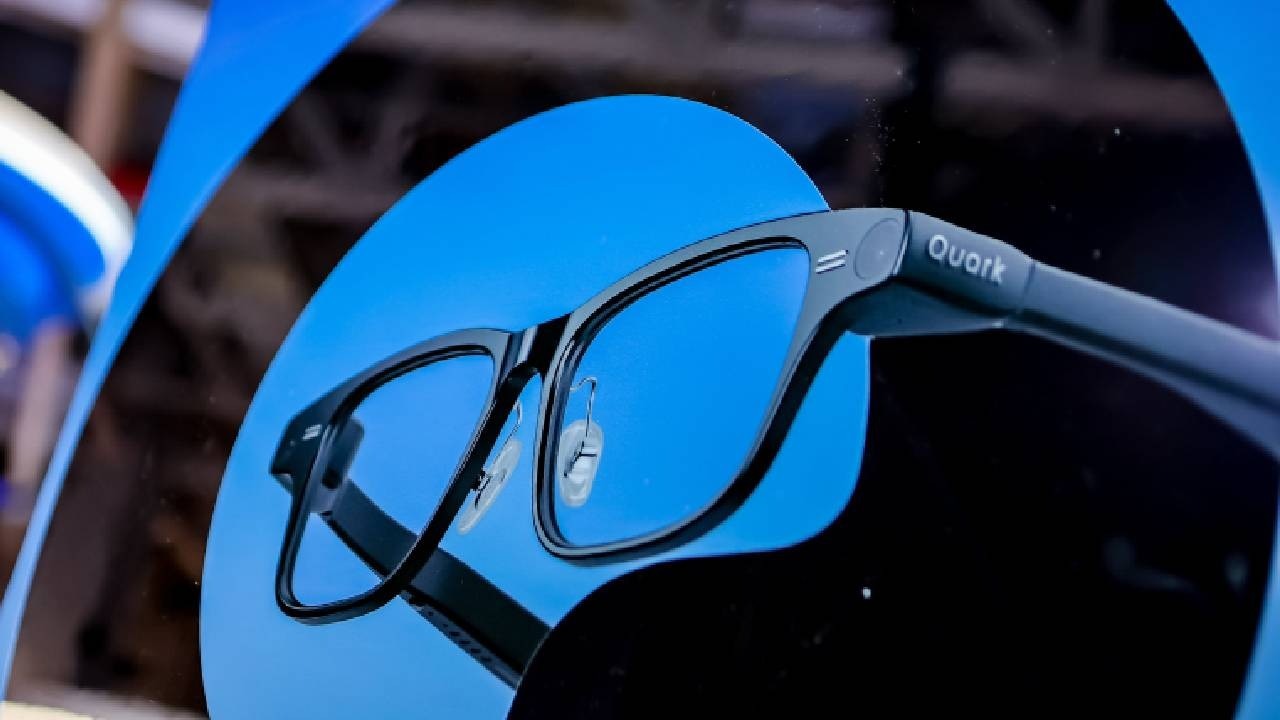
Alibaba has officially entered the burgeoning AI wearable race, announcing new AI-powered smart glasses called Quark in China. The launch marks the e-commerce giant’s boldest move yet into the consumer AI space as it seeks to compete with global powerhouses such as Meta, Apple and Samsung. Quark glasses start at 1,899 yuan (approximately Rs. 21,800) and are powered by Alibaba’s in-house Qwen AI model and an accompanying app. But unlike bulky headsets like Meta’s Quest or Apple’s Vision Pro, Alibaba’s latest gadgets have refined things so that the glasses look like regular glasses with black rims rather than futuristic hardware strapped to your face.
The company says Quark glasses are designed for “everyday AI” by combining practicality with delicate design. From on-the-go translation and instant price recognition to integration with Alibaba’s Alipay and Taobao, the glasses aim to simplify daily tasks through context-aware intelligence.
Alibaba enters AI hardware race with Quark smart glasses
Alibaba has long dominated China’s e-commerce and cloud industries, but has lagged rivals in consumer hardware and AI-driven products. That seems to be changing. The company is now accelerating its efforts to translate AI research into physical products that consumers can wear, touch, and interact with.
Earlier this year, Alibaba unveiled a major upgrade to its Qwen chatbot, which forms the core intelligence behind the new glasses. This integration allows users to issue commands, ask questions, and get recommendations directly through their Quark devices.
Alibaba said the launch is part of its broader vision to create a “seamless AI ecosystem” that combines its shopping, payments and content platforms with advanced artificial intelligence. By combining Qwen’s generative AI capabilities with real-world tools, Alibaba hopes to bridge the gap between software and lifestyle technology.
However, Alibaba’s strength lies in its huge ecosystem. Tight integration of Quark Glasses with apps like Taobao (for shopping) and Alipay (for payments) could potentially provide users with a seamless experience not possible with standalone devices. Imagine being able to browse products, compare prices, and pay with simple voice commands through your glasses without ever reaching for your phone.
The company has not yet revealed a global launch date, but confirmed that international expansion is planned for 2026, starting with select markets in Asia and Europe. Analysts believe that if Quark glasses are priced competitively, they could challenge Meta’s dominance in the mid-range wearables space, especially among younger consumers looking for trendy technology.
Growth of China’s smart glasses scene
Alibaba is not the only Chinese tech company eyeing the AI eyewear market. Xiaomi announced its own smart glasses offering live translation and navigation tools in June, while Baidu has already released a pair capable of real-time information overlays. Together, they are transforming China into one of the most competitive frontiers for AI-powered personal devices.
As Alibaba joins a growing list of tech giants betting on AI wearables, the question is not whether these devices will go mainstream, but which companies will transform them from novelty to necessity. Alibaba is wearing Quark glasses to signal that it intends to be in the competition for the long term.
The company’s entry comes at a time when the global market for AI-driven wearables is rapidly heating up. According to industry estimates, Meta currently has around 80 percent market share in the augmented reality (XR) and smart headsets space, led by the Quest series and Ray-Ban Meta smart glasses.
Apple’s Vision Pro, on the other hand, helped redefine the segment as a high-end computing device, albeit an ultra-premium one. Meanwhile, Samsung’s Galaxy XR, launched in partnership with Google earlier this year, introduced new AI features aimed at entertainment and productivity.
– end