
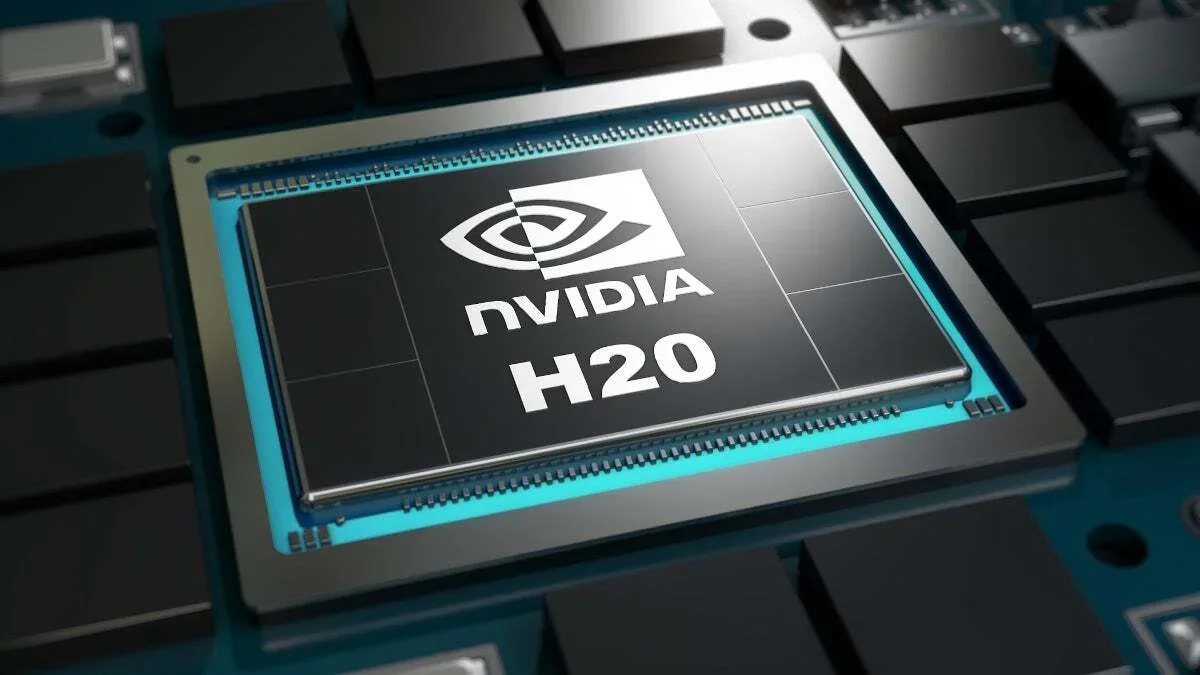
The U.S. government is considering granting permission to Nvidia, according to people familiar with the Trump administration’s thinking. Nvidia H200 AI accelerator chips will be sold in China. This chip is designed to speed up AI calculations. These graphics processing units (GPUs) use parallel processing and can perform matrix multiplication calculations on thousands of cores simultaneously.
Nvidia’s H200 is twice as powerful as the most powerful Nvidia AI accelerator the U.S. allows to ship to China
Although White House officials and the Commerce Department declined to comment on the matter, the administration released a citation that made no mention of the issue at hand involving NVIDIA. “The administration is committed to ensuring America’s global technology leadership and protecting our national security,” a White House official said. These are the standard goals of every administration that has operated at 1600 Pennsylvania Avenue.
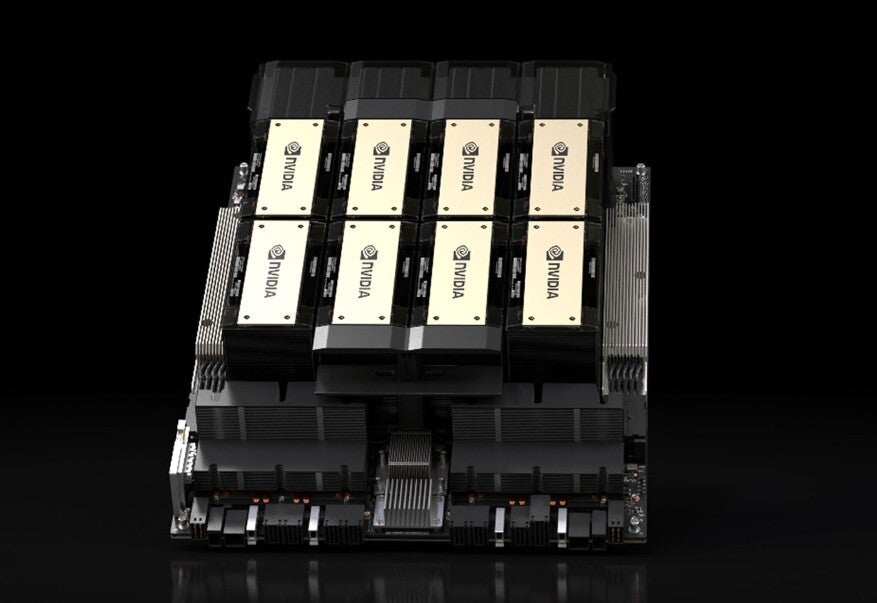
Nvidia expects to be allowed to ship its H200 AI accelerators to China. |Image credit-Nvdia
Nvidia’s H200 chip was launched several years ago. With more high-bandwidth memory than the H100 AI Accelerator, the H200 processes data faster. The chip is manufactured by TSMC using the 4nm process node and features the Hopper core architecture. It’s also twice as powerful as Nvidia’s H20 GPU, the company’s most powerful AI chip that the U.S. currently allows to ship to China. The Nvidia H200 is built for Large Language Model (LLM) and High Performance Computing (HPC) units. It features 141GB of HBM3e memory and 4.8TB/s memory bandwidth.
US approves shipment of 70,000 Nvidia next-generation Blackwell AI chips to Saudi Arabia and UAE
In April of this year, the Trump administration banned sales of NVIDIA H20 to China, but reversed its stance just weeks later. The administration announced last week that it had approved the export of up to 70,000 Nvidia Blackwell chips to Saudi Arabia’s Humane and the United Arab Emirates’ G42. The Blackwell chip is Nvidia’s next-generation AI accelerator.
President Donald Trump has talked about increasing U.S. technology exports to China, and the Department of Commerce is expected to change U.S. chip export control policy in response to the recent bilateral agreement between the U.S. and China. As part of the bilateral trade agreement, the US agreed to reduce the average tariff rate on US imports from China to 48%.
According to one estimate, Huawei’s Ascend AI accelerator owns 79% market share in China.
Nvidia executives say export restrictions prevent the company from offering competitive data center products in China. This opens up China to Nvidia’s rivals from other countries that have no restrictions on technology exports to China. And, as already noted, Nvidia’s most powerful AI chips won’t be competing for market share in China, allowing Huawei to sell its Ascend 910C AI accelerator, used to train AI models, at home. A quick analysis shows that Huawei’s Ascend AI accelerator has a huge market share of 79% in the domestic AI accelerator market.


