

Alkhobar: When Saudi Arabia announced Allam, a large-scale language model for Arabic, it sent a clear signal.
We aim to build our own unique features. For many, this was a moment of pride. It is proof that the Arab world can create tools designed to understand its own language, culture and context.
However, experts should note that Aram is just the first step in a much longer journey. Success is determined not only by models but by the invisible foundations that support them: data, infrastructure, governance, and trust.
“We cannot capture the depth of Arabic's intentions, emotions and culture through translation,” said David Barber, director of UIPATH's UCL Center and a well-known scientist. “We need a system of thinking from scratch in Arabic.”

Barber emphasizes the harsh reality. Only about 15% of Arabic texts online are clean enough to train large language models, compared to over 50% of English. What further complicates the problem is the complex grammar of Arabic, diverse dialects, and the general mix of English and Arabic in a single sentence.
“When you train with noisy or shallow data, the system learns shortcuts,” Barber explained. “It can mimic flow ency, but it misses depth, idioms, cultural nuances, and rhythms of thought that articulates Arabic.”
For barbers, this underscores the importance of Saudi Arabia's promotion of high-quality locally produced data sets. Without them, Arabic LLM is at risk of becoming a shallow copy of the English language AI. Although competent in general tasks, it cannot capture the soul of the language it claims to represent.
Even the best data is ineffective if it is not properly organized, protected and delivered to the model. Seema Alidily, Regional Director at Denodo, said Gulf companies still face major challenges here.
“Without localized infrastructure, AI systems run the risk of misunderstanding the user's intent or generating unrelated output,” she said. “Data virtualization is one of the few ways to integrate governance and access across cloud and on-site systems without moving sensitive information.”

In reality, this means investing in a platform that can extract data from dozens of scattered sources, from ERP systems to IoT sensors, and present it in a unified view used by AI. This approach is important in Saudi Arabia, where the Vision 2030 project relies on large, real-time data sets, especially given strict regulations regarding the processing of citizen data.
Alidily warned that simply replicating Western infrastructure might not be enough. “In the Gulf Coast, centralized visibility and compliance must come first,” she noted. “It's not just a technical issue, it's about adjusting it to the legal, cultural and regulatory expectations of the region.”
For Bader Albahaian, Saudi Arabia's country manager, interests exceed efficiency for Bader Manager, which is in the vast amount of data. They touch on independence and safety.
“If you rely solely on external platforms, there is a risk of importing policies and priorities at the expense of local needs,” he said.
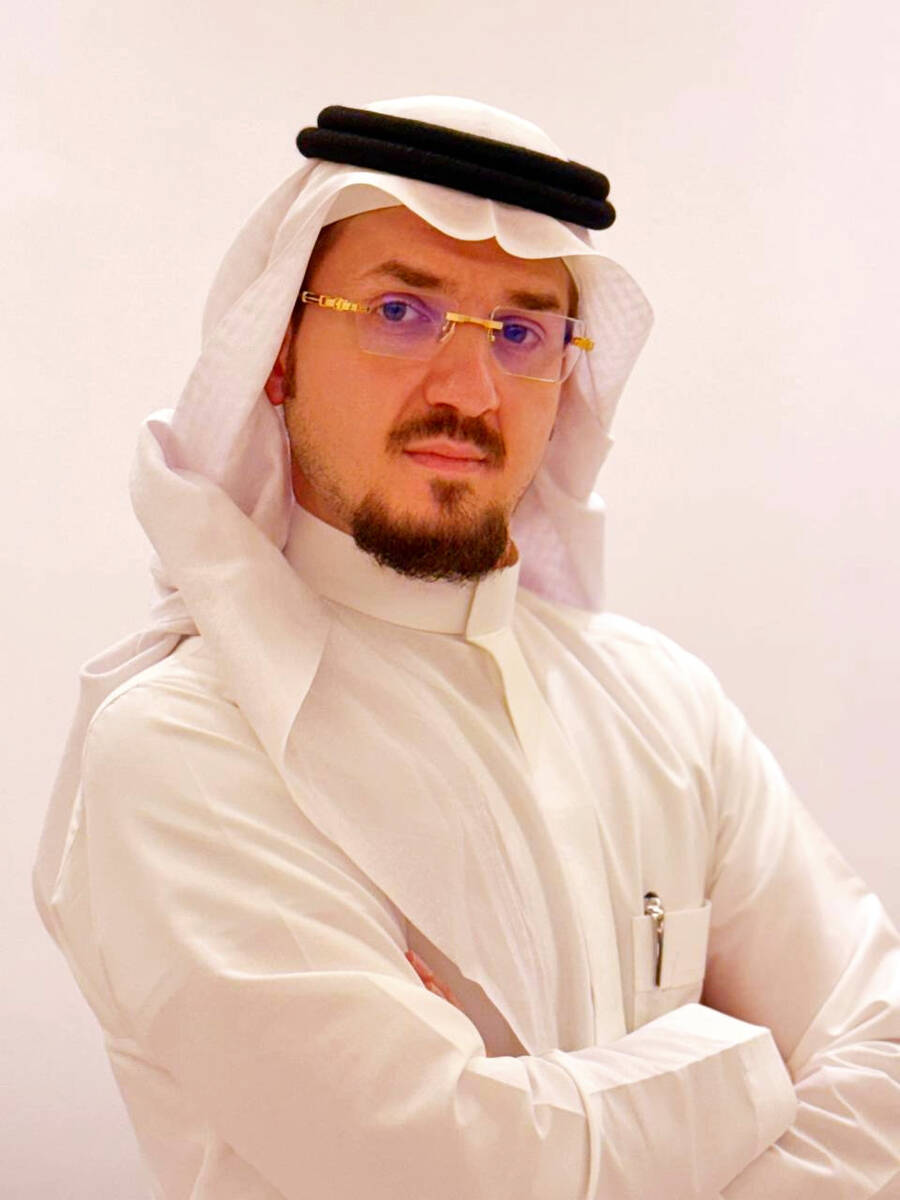
Alba Haian supports the “sovereign bi-design” system. Storage and computing architectures that maintain borders, encryption, access control, and AI models trained based on rules set by kingdoms rather than foreign vendors to satisfy local regulators.
“It's not just where the data is,” he added. “It's about who's being used and how, who's being held responsible when something goes wrong, and who has the power to turn the system off if necessary.”
This issue of sovereignty is becoming urgent as AI is beginning to shape decisions in finance, healthcare, education and public policy. Incorrect models trained with foreign data may issue recommendations that are inconsistent with local priorities. Worse, it puts the region at economic or political risk.
But building the perfect infrastructure is only half the challenge. Success ultimately depends on how AI is deployed.
“Digital labor allows businesses to have much deeper relationships with their customers,” said Ibrahim Alcegaia, Managing Director, Salesforce Saudi Arabia. “And by taking on many of the everyday tasks, AI releases humans and focuses on collaboration, creativity and critical thinking.”

Alseghayr points to Agent AI (a system that allows you to act on behalf of a company) as an already transformative service center, financial management and citizen engagement platform. In Saudi Arabia, we see great potential for digital labor in scaling megaprojects such as Neom, automating logistics networks, and delivering smarter healthcare services.
He warned that the transformation must be carefully managed. “We need strong governance, a testing environment and continuous monitoring,” he said. “If not, we risk building tools that we don't fully understand, which could erode trust instead of building them.”
One theme is clear across all four experts. Global rules and imported frameworks are not sufficient. The Arab world must create its own AI governance model rooted in cultural and legal realities.
For barbers, Aram is a test case. “This is a kingdom's chance to prove that it can not only be technically powerful, but also have a system that matches its value,” he added.
You did know?
• The complex grammar of Arabic, the diversity of dialects, and the frequent mix of English and Arabic make it one of the hardest languages for AI to master.
• Saudi Arabian Alam is the first major language model of homemade Arabic designed to be thought of in Arabic rather than translated from English.
•The Vision 2030 project relies on real-time data, but regulations require strict handling of citizen information.
“Agent AI can create personalized treatment plans, autonomously monitor patients and detect early signs of health degradation before doctors enter the room,” he said. The governance framework emphasizes that regulators must work closely together to define shared standards to reflect the Gulf's unique data protection requirements.
Alba Haian is even more direct. “It's not a slogan, but through the system. People need to know where their data is, who is using it, what purpose they need to know. That's the only way to build trust on a large scale.”
The message is clear. The future of Arabic AI is not determined by model size alone. It depends on investments in infrastructure, sovereignty and governance.
Saudi Arabia has taken its first step with Alam. What comes next – data pipelines, virtualized infrastructure, sovereign control, digital labor deployment – determine whether the kingdom will be a true AI creator or a buyer of information built in a foreign country.


