

Continuous searching for concrete mixes that reduce carbon and make them faster and harder is complex and there are researchers facing hundreds of variables. The teams at Massachusetts Institute of Technology (MIT) and technology giant Meta each used AI to help them reach real conclusions.
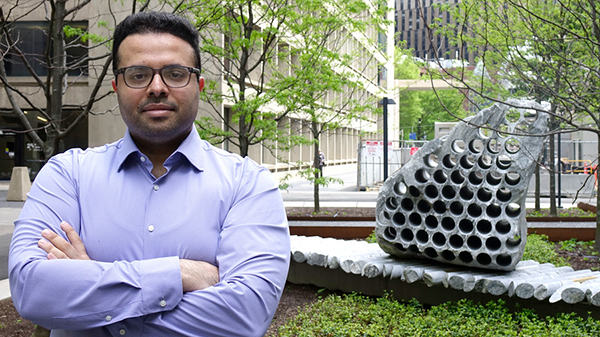
“There's a lot of data on potential material. It's hundreds of thousands of pages of scientific literature,” says Solousch Majoubi, a postdoc civil and environmental engineering student. “Sorting them would have done a lot of lifetime work. By that time, we would have discovered more materials. We realized that AI is the key to moving forward.”
The MIT team has built a machine learning framework based on a large-scale language model that evaluates and ranks candidate materials based on physical and chemical properties that may contribute to the success of alternative cements.
Ancient Roman concrete has long been considered a kind of holy grail. Majoubi and his team noted that the ceramics used in these mixes contributed to the waterproof properties that contribute to the lifespan of the structures that still stand on today.
They also investigated the potential for “high reactivity” of tiles, bricks and ceramics today, and investigated the chemical reactions within concrete mixtures. These can enhance the properties of concrete. The possibility of reusing such everyday materials, and even industrial materials such as mine tails, point to the development of concrete mixes rather than contributing to the circular building economy.
Professor Elsa Olivetti, a senior author of the work and a member of the MIT Faculty of Materials Science and Engineering, acknowledges that AI has helped enable in-depth research for the team. “AI tools have acquired this research much more quickly. We look forward to how the latest developments in large-scale language models will enable the next step.”
Meanwhile, Tech Giant Meta plans to build several new, powerful data centers across the US. Facilities like these will require enormous amounts of electricity to operate, launching concerns surrounding carbon emissions related to power consumption and the production methods that may be used.
Addressing the environmental questions surrounding new data centers, Meta has made a general commitment to building facilities in the most sustainable way possible. Most of this involves the use of carbon-reduced concrete.
“Modern structures, including data centers, require concrete optimized for sustainability, hardening speed, workability and finishing,” explains Meta. “Compared to traditional concrete, the current formula for low carbon concrete faces several challenges: slow hardening speed, surface quality issues, and supply chain complications when new materials are involved.”
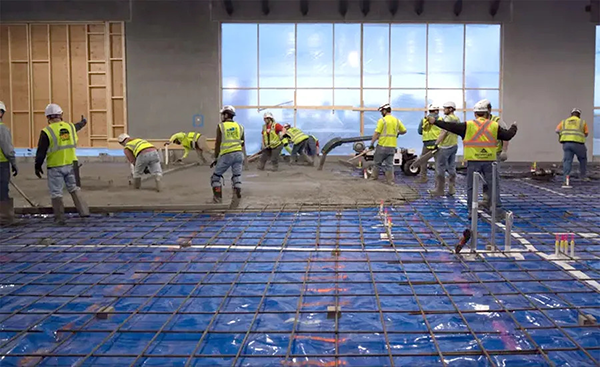
Specific formulation innovations are difficult and slow. Developing the right combination of concrete to meet the corporate sustainability goals is extremely complicated. Meta collaborated with Amrize, the North American spinoff of Holsim, and Grainger School of Engineering at the University of Illinois Urbana-Champaign. Together, they developed open source AI tools that leverage Bayesian optimization, accelerated the discovery of new concrete mixtures that meet traditional requirements along with new sustainability needs.
Meta has successfully deployed a concrete mix optimized with AI tools to build a $800 million, 715,000 square foot data center in Rosemount, Minnesota. The numbers achieved are impressive.
Concrete mix reportedly shows a 35% decrease in the data center's carbon footprint and a 9.5% decrease in shrinkage. We have reached 43% strength, 43%, than the original slab mix.
Meta's AI model is open source and can now be downloaded by others from Github.
“The open source AI model makes everyone jump to that level,” says Nishant Garg, an assistant professor at Grainger University. “If you want to improve concrete, even if only one company is concrete, if the remaining concrete producers are behind, it won't help the entire industry.
“There are many opportunities for different stakeholders to work together: general contractors, concrete and material suppliers, building owners,” says Darryl Neopolitano, manager of AMRIZE's major construction projects. “We all have a stake in revolutionizing the most used materials on the planet. I think if we work together we can advance the way our world builds a future.”
John Blairby is a freelance writer. Submit your comments and ideas for internal innovation columns to editor@dailycommercialnews.com.


