In 2025, the technology sector witnessed an unprecedented wave of breakthroughs. Generative AI is driving digital transformation with powerful momentum, like a dazzling new star. Humanoid robots have also emerged, stepping into competitive tracks, demonstrating amazing possibilities.
Technology has become a “X” variable that brings about disruptive innovation, pushing it to upgrade a variety of industries. The discussion of the future becomes even more important in this process. What advances will these cutting-edge technology make? What innovative scenarios will emerge in the future? And how do innovators reshape the business world? All of these questions will be answered at the 2025 Imagination Meeting.

Intelligent Future: On the Crisis of Explosion
Eleven years ago, bytedance's young founder Zhang Yiming introduced a new product, “Toutiao,” which customized information through algorithms, to participants at the 2014 Imagination Conference, sharing how machines can help free humans from repetitive tasks.
At the time, it sparked the imagination of many people about future technology. As 2025 begins, an intelligent transformation of the real senses will unfold. AI has shifted from tools to powerful productivity, with “AI agents” and “embodied intelligence” becoming the hottest keywords in 2025.
In this wave of technological innovation, large scale models undoubtedly occupy the core position. Tech giants such as Alibaba, Baidu, Tencent and Bytedance all deploy their own large-scale models and application ecosystems in the field of large-scale models. Meanwhile, star-level startups like Deepseek, Jieyue Xingchen and Zhipu AI are also rising one after another, and are moving forward with them.
During the Spring Festival of 2025, Deepseek suddenly appeared and quickly gained popularity for its open code and intelligent applications. This “catfish” was caught up in a large scale model company in Japan, and they continued to repeat models one after another, launching low-priced, highly efficient products. At the same time, 2025 has become a year of explosion of inference models, with large-scale model products evolving from “answer to questions” to “thinking.”
Based on the continuous evolution of large-scale models, 2025 has become the industry-recognized “AI Agent Year.” Tech Giants launched one after another agent development platform, and AI has moved from passively responsive tools to a “digital workforce” where tasks are actively carried out.
From new experiences for individual users to enterprise-side applications, AI agent applications have taken root and blossomed in many scenarios, including consumption, travel, office work and more. For example, Bytedance's AI Collaborative Office platform “Kouzi Space,” launched in the first half of this year, helps users complete a variety of complex tasks through AI agents. In manufacturing, digital factories driven by AI agents can optimize production processes and reduce energy consumption. In the healthcare industry, AI applications help doctors analyze their medical records.
With the support of AI's “brain”, robots are beginning to enter into more specific scenarios.
On the stage at this year's Spring Festival Gala, a humanoid robot from Unitree Technology stole the show. Wore flower-filled jackets and carrying silk handkerchiefs, they danced with real human dancers in flexible, natural movements, bringing the audience a visual east feast that combined skills and tradition.
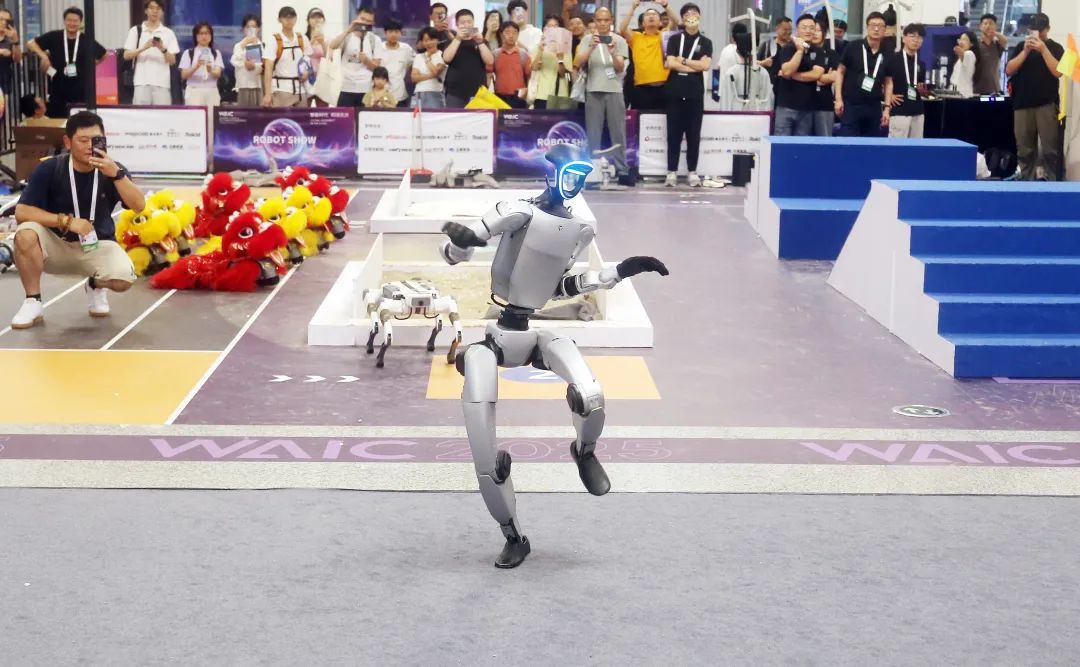
When humanoid robots, commonly seen at the time, were in the performance and demonstration stages, the World Robot Conference held in August this year was an exhibition of the robot's “working capabilities.” Robot On – The site not only allowed to play soccer and play football, but also served coffee, poured beer and wrote calligraphy for the audience, moving from “who can walk and move” to “can do work.”
Industry such as manufacturing, health and services are also important areas of robot implementation. Factory robots aren't just “tools – men” who repeat the task of screwing screws. With the help of the AI brain, they learn to identify partial defects and even allow them to independently adjust the production process according to changes in order. Rehabilitation robots help patients with limb impairments in walking training, adjust forces in real time via sensors, making the rehabilitation process more scientific and efficient. In commercial services scenarios, self-service pick – robots in supermarkets and convenience stores can accurately find the location of the product according to customer's orders and automatically complete the pickup and packaging process.
From software to hardware, the commercialization of AI applications is on the verge of explosion.

Looking for the power of change in a new era
Meanwhile, AI is restructuring business and product innovation models across a variety of industries. These technological products, once “wild ideas,” are now in their roots and blossoming.
Smart wearable devices centered around AI glasses are becoming the focus of competition between tech giants, AR/VR manufacturers and emerging brands. In daily shopping and payment scenarios, consumers can complete their payments in the near future by simply “seeing” their AI glasses.
In travel scenarios, intelligent map navigation automatically plans the best route for your users. Autonomous Driving – Hale services in certain scenarios are operated in multiple cities.
The education industry is also quietly changing. With an endless stream of educational hardware, “digital teachers” can provide virtual human technology through interactive Q&A to meet the personalized needs of education.
In this wave of AI-dominated technological transformation, more and more companies face unprecedented market opportunities, but at the same time, they also face new challenges. How do you embrace AI's “change” and create a new business strategy that is right for you? What innovative technologies and cutting in the industry – Edge products are emerging and what new application scenarios are opening up?
Started by Caixin Global and co-hosted by Renwu and Meiri Renwu, the 2025 Imagination Conference invites entrepreneurs and transformers in the spirit of “wild imagination” and focuses on innovative technologies and products, and discusses hot industry topics. All of the above questions will also be answered at the meeting.
Companies that are good at identifying market trends and owning innovation capabilities are also becoming key players in this wave of technological and business transformation. The meeting will also launch a recruitment plan to search for technical variables that could disrupt the industry. Large companies in the industry with “AI+X” solutions and applications cases, as well as startups brave enough to lead new technology trends and open new markets, all have the opportunity to participate and tell their own innovation stories.
Since its founding, the Imagination Council has always focused on the power of imagination and innovation, witnessing how many “wild ideas” have come to life in the future. New doors for the AI era are open, so join in to witness the future again.