
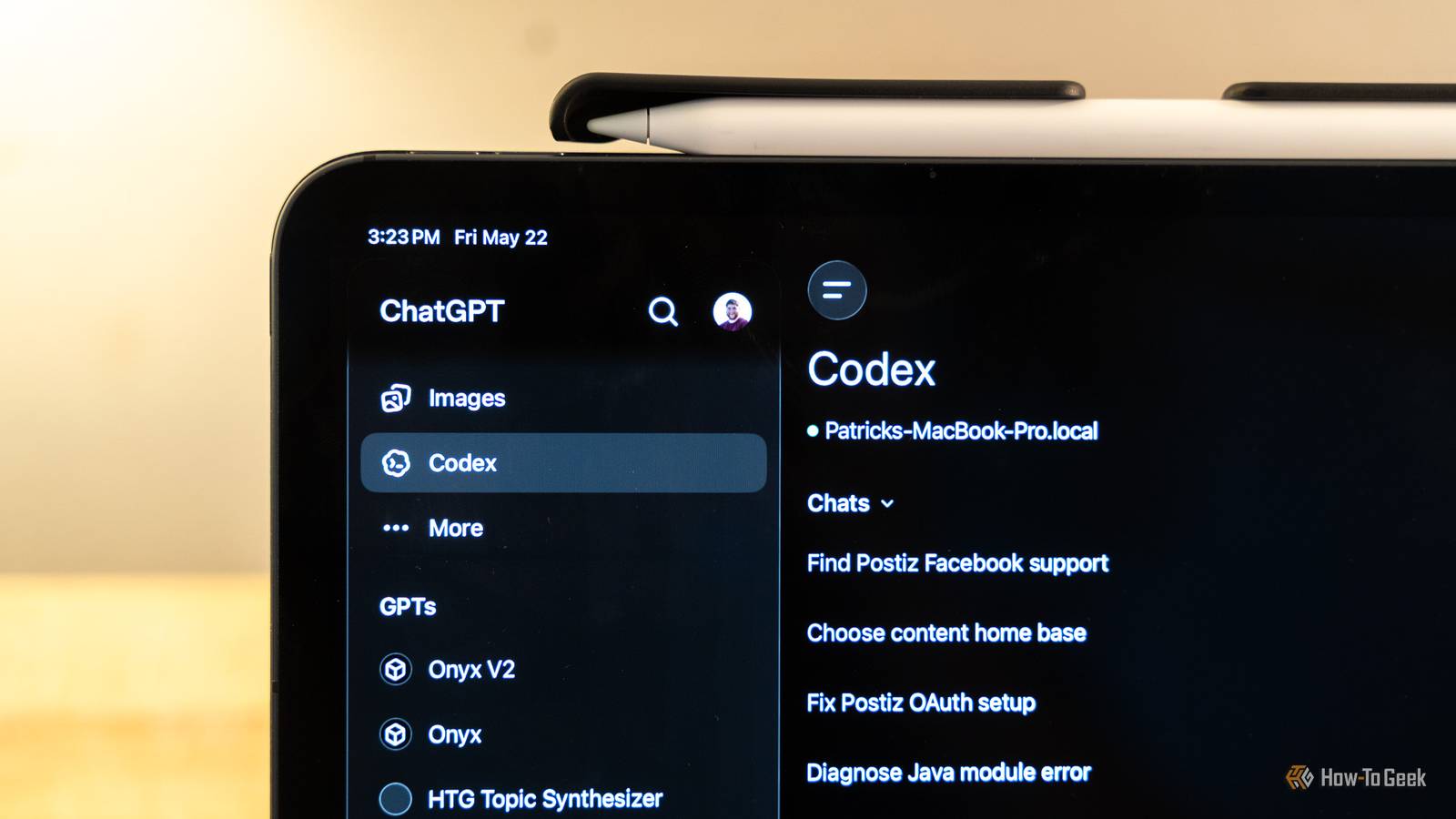
Just a few months ago, Claude Code was the absolute pinnacle of AI programming. However, the tables have recently turned and a newcomer is gaining traction as the best LLM for programmers. Codex.
Claude Code has been the pinnacle of agent coding for some time
Anthropic focuses on Enterprise and it’s worked well for them
If we rewind the clock and look at the end of 2025 and the beginning of 2026, Claude Code was by far #1 when it came to agent coding. Google’s Antigravity garnered a lot of attention, but it still lagged far behind Claude Code.
Claude Code is a frontier platform used by many large companies such as Spotify. With this kind of backing, Anthropic was receiving significant funding from API token payments from large companies. I have a good friend who worked at a company that relied heavily on Claude Code, and the amount spent on tokens was just him It was astronomical.
However, Claude was a bit arrogant, taking his position as market leader for granted. Opus 4.5 was arguably the best coding model ever at the time, and Opus 4.6 was supposed to outperform it, but Anthropic made some questionable choices.
After the release of Opus 4.6, the quality of the output seemed to be much lower than people expected. This resulted in significant downtime and forced people to find alternative solutions. That solution is now provided by OpenAI, which has updated its Codex platform.
OpenAI’s Codex overtook Claude Code as soon as it hit store shelves.
OpenAI was behind the curve, now it’s in the lead

It’s no surprise that OpenAI’s ChatGPT is the most popular AI chatbot. Anthropic’s Claude is a great tool, but Anthropic doesn’t have the user reach that OpenAI does.
So it was a little surprising that OpenAI didn’t have a strong Claude Code competitor to date. Sure, Codex existed as a model to use, something like Claude Code, but it was nowhere near the level Anthropic was putting out. However, in February 2026, things changed.
When OpenAI released their new Codex app, it immediately took the world of AI programming by storm. I was actually quite surprised at how quickly it took over. At a time when Claude Code was taking more tokens from users, Codex was giving more tokens to users. In fact, Codex rate limits are reset so often that there is a website to track when they were last reset. When Claude Code reasoning was being rejected, Codex offered fast modes, advanced reasoning efforts, and more.
I was a big fan of Claude Code at first and it was the only model I trusted for what I was working on. But after a while, I realized that Claude Code was starting to reach the point where it was just a month or two ago, so I jumped on the Codex train as well.
After just a few days of using Codex, I realized that it’s definitely the one I need to spend some time programming on. The output was better, the quality was higher, and the features quickly caught up to Claude Code’s standards. Codex then surpassed Claude Code in functionality and has been sailing ever since.
OpenAI also acquired OpenClaw a few months ago, shortly after the name change when Anthropic sent cease-and-desist letters to developers, and then started blocking their use in cloud models and charging them extra fees in some cases. Meanwhile, Codex now works natively with OpenClaw, and you can now use Codex tokens for monthly subscriptions on both Codex and Hermise.
OpenAI is becoming more open about its model and how it uses subscriptions, but Anthropic seems to be getting more stingy with this.
I’m not a programmer, but here’s why I prefer Codex over ChatGPT
Despite its name, Codex is not just for coders and programmers. Anyone can and should use it.
Codex is advancing faster than Claude Code can keep up.
I was hoping Anthropic would be a success, but it looks like that’s no longer likely.

In the past week or two, Codex has introduced a number of features, including remote coding. This means you can sync your Codex conversations with your mobile app (or any other computer) and continue where you left off from anywhere.
Let’s say you have a Mac mini at home that you use for development and an iPad that you use to work on the go. Link your iPad to your Mac mini and continue developing from anywhere without setting up a VPN. Simply issue commands to Codex through the mobile app and it will be relayed to your Mac mini.
Similarly, if you have a Mac Studio and a MacBook Air, you can do the same. Your MacBook Air becomes a remote control for Mac Studio that you can issue commands to. Alternatively, if you have a remote development box, you can make the same type of connection via SSH (or within your mobile app).
Use that computer, plug-ins, and add new features. /goal Functions and Codex are simply ahead of Claude Code in terms of available functionality. I used to be an avid Claude Cord fan, but now I don’t think anything will bring me back.

- What’s included?
-
Unlimited conversations, faster response speeds, priority access, and more
- brand
-
Chat GPT
ChatGPT’s AI support gets even better with a paid subscription. The it Plus level offers enhanced features such as unlimited conversations, faster response speeds, and priority access.
Codex is the best AI programming model available today.
I currently only rely on Codex for my AI programming needs. It works better than Claude Code for my needs, gives me more tokens than I could reasonably use on a $100/month plan, and is much more reliable than Claude Code has been for the past few months.
If you’re still using Claude Code, give Codex a try.


