
4 View gallery
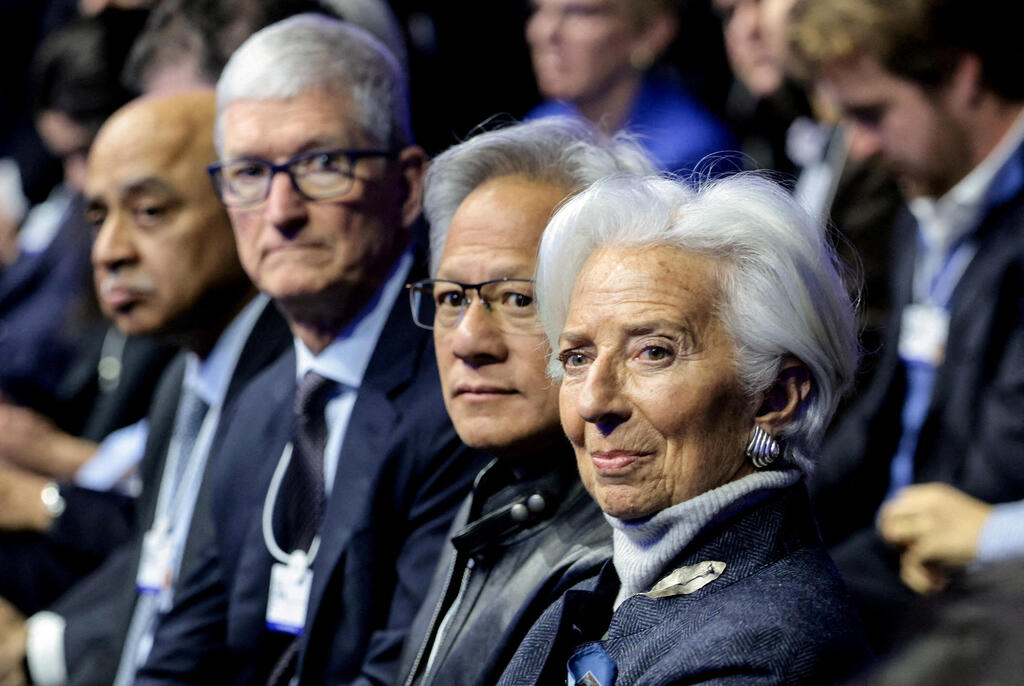
From right: European Central Bank President Christine Lagarde, Jensen Huang, and Tim Cook.
(Photo: Reuters)
The change reflects a growing recognition that U.S. efforts to slow China’s AI advances through export controls are not having the desired results. In 2023, many Western analysts predicted that China’s generative AI sector would gradually suffocate once access to advanced processors was cut off. The assumption was that advances in AI depend primarily on raw computing power. Three years later, that view was radically reversed.
Google DeepMind founder and CEO Demis Hassabis said China’s AI companies are now only about six months behind the most advanced Western research institutions, a dramatic change from predictions just two years ago that set China back several years. Hassabis said that despite the hardware limitations, the Chinese model is rapidly progressing and remains close to the cutting edge. The impact of DeepSeek’s 2025 release, which demonstrated competitive performance at a much lower cost, remains significant in industry discussions.
4 View gallery

Demis Hassabis, Google DeepMind Founder and CEO
(Photo: Reuters)
The narrowing gap has raised concerns about access to computing power, especially Nvidia’s advanced chips. Anthropic CEO Dario Amodei used uncharacteristically harsh language to criticize the U.S. decision to allow limited chip sales to China, comparing the move to providing nuclear-like capabilities to authoritarian governments. Granting access to such computing power could enable large-scale cyber operations and accelerate weapons development, he said.
OpenAI CEO Sam Altman has tried to position himself as a cautious but cautious voice. Speaking at Davos, he warned that the United States is dangerously underestimating China’s progress while focusing too much on whether AI investments represent a financial bubble. Altman argued that the massive spending on data centers and infrastructure represents the largest expansion in human history and should be seen as a security necessity rather than an excess of speculation. If Western governments and companies hesitate, China will move quickly to bridge the gap, he said.
Elon Musk conveyed a completely different message. Musk, once considered a controversial figure on forums, made a last-minute appearance in Switzerland, emphasizing execution over prudence. While others discussed regulations and risks, Musk highlighted what he called an undeniable engineering milestone: the launch of Colossus 2, a computing cluster operating at gigawatt scale. Mr. Musk has dismissed calls to slow AI development in the name of safety, arguing that only speed and sheer computing power can match China’s advances and ridiculing rivals who advocate restraint.
4 View gallery
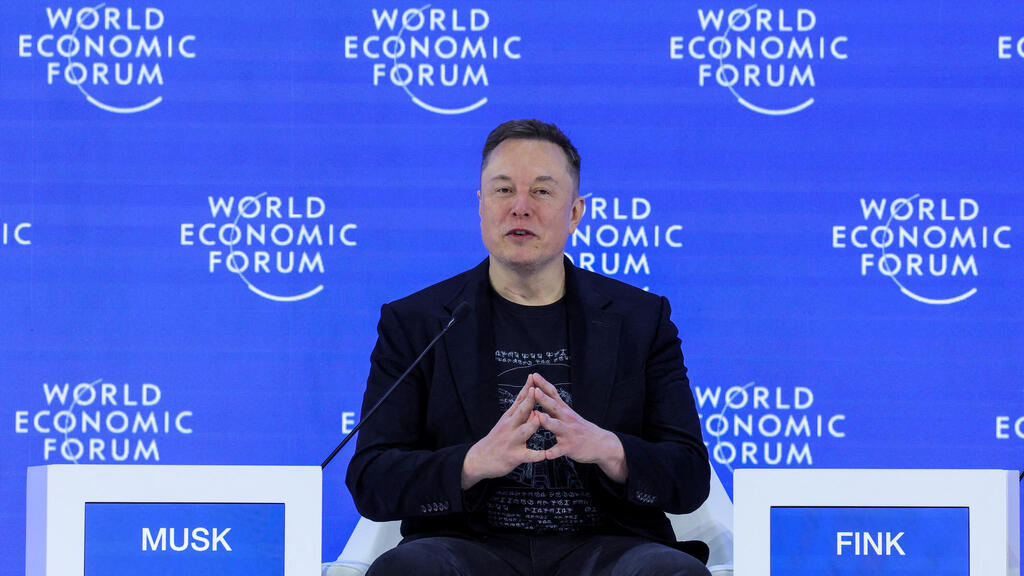
Elon Musk
(Photo: Reuters)
Jeff Bezos offered a calmer, more realistic assessment. In remarks made off the main stage at Davos, the Amazon founder likened the AI infrastructure race to the early industrial revolution. At the time, factories were forced to build their own power plants before centralized power grids existed. Mr. Bezos warned that what he called an industrial bubble was not necessarily a financial collapse, but an era of inefficiency and massive waste of capital. He says that even if the technology itself is successful, many companies will quickly run out of cash and are likely to go bankrupt. Bezos, a major investor in Anthropic, said such shakeouts are a natural part of the economic cycle.
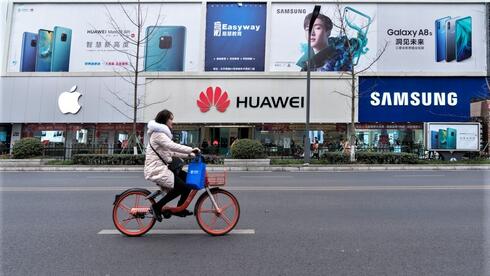
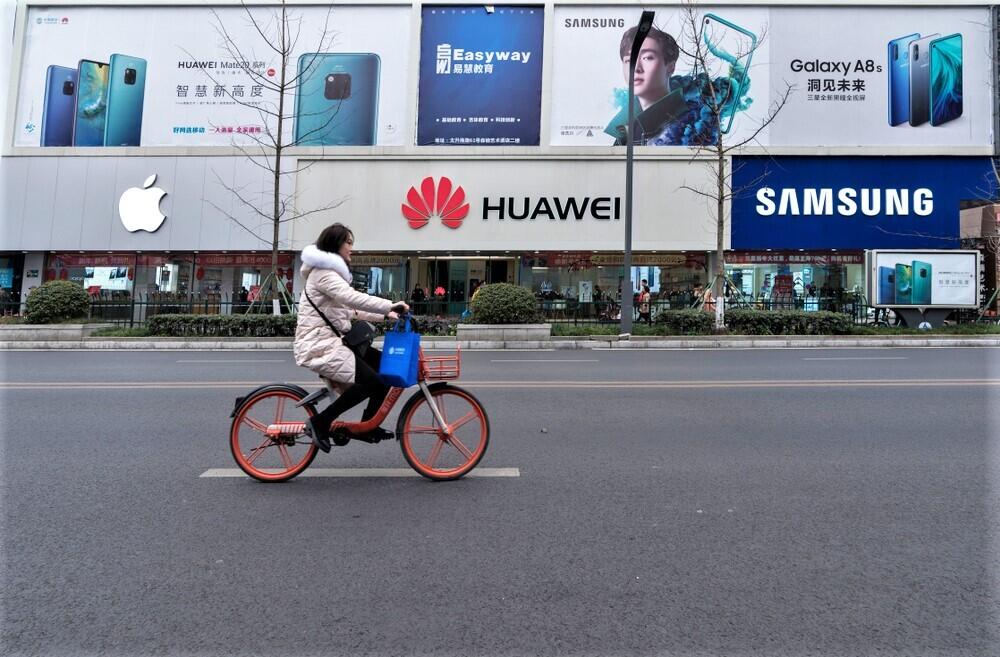
While Western leaders debated strategy, China continued to build a national AI ecosystem largely isolated from Western constraints. The country has invested heavily in nuclear, solar and hydroelectric power to supply the huge energy needs of data centres. At the same time, Chinese companies are optimizing their AI models to work with domestically produced chips, especially Huawei’s Ascend series.
These chips still lag behind Nvidia’s most advanced processors, but Chinese engineers have compensated by using advanced optical networking to connect tens of thousands of chips into large computing clusters. Intelligence and media reports also point to a growing gray market in which advanced chips are smuggled into China via third countries and reused for high-performance computing at universities and military facilities.
Analysts say China’s strongest advantage lies in data, not hardware. Unlike Western companies, which are constrained by privacy laws, copyright lawsuits and public surveillance, China’s AI companies have broad access to data generated by its 1.4 billion people. Government policy treats data as a national resource and allows for widespread use of information from multipurpose apps such as WeChat, which integrate payments, transportation, health services, and communications. This access will allow Chinese models to be trained on real-world human behavior on a scale unmatched in the West, raising concerns that Chinese consumer technology collects data overseas.
4 View gallery
China’s approach also differs in its end goals. While Silicon Valley continues to focus on enabling artificial general intelligence, Beijing is focused on industrial development. AI is being integrated into manufacturing, electric vehicles, and urban management systems, enabling China to create immediate economic value. Automakers such as BYD and Xiaomi are integrating language and visual models directly into vehicles, turning them into increasingly autonomous systems.
Another factor reshaping competition is human capital. China has long suffered from a brain drain, with top U.S.-trained researchers remaining in Western academia and industry. That trend is now reversing. Rising nationalism, concerns about the treatment of Chinese researchers overseas, and high salaries offered by Chinese companies have led many scientists to return to China. These returnees bring Western training and networks to their labs in Beijing and Shanghai, where academia, industry and the military operate in a tightly integrated system.
Davos participants warned that the West’s biggest mistake would be to continue to assess China through a purely Western lens. While the United States still monopolizes access to cutting-edge chips, China is building an alternative AI ecosystem based on domestic hardware, highly efficient algorithms, and vast access to data.
The threat, executives said, is not that China will copy Western models, but rather that it will develop cheaper and more widely deployed AI systems that can be built into physical products and exported across emerging markets in Africa, Asia and Latin America.
When Davos 2026 concluded, many executives described the moment as a historic turning point. Gone are the days when technology companies could operate in a bubble of pure innovation. Artificial intelligence has become inseparable from geopolitics, and every advance in software and silicon is now part of a global strategic contest.
They said the six-month gap separating Western and Chinese AI capabilities is not a period of comfort, but a narrowing window that could soon be closed.


