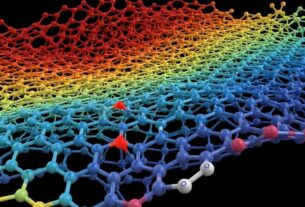
The growing demand for accurate and efficient atomic simulations is driving the development of machine learning interatomic potentials (MLIPs) that can model complex molecular systems at significantly reduced computational costs. However, the lack of standardized assessment tools prevents consistent comparison and application of these models. To address this challenge, Leon Wehrhan, Lucien Walewski, Marie Bluntzer, and their colleagues at InstaDeep introduced MLIPAudit, a comprehensive and open benchmark suite. This new tool evaluates MLIP accuracy across a variety of application tasks, including organic compounds, liquids, proteins, and peptides, and features a continuously updated leaderboard for direct performance comparisons. MLIPAudit increases reproducibility and accelerates progress in the development of reliable MLIP for complex molecular systems by establishing a unified and transparent framework for validation.
Currently, the computational cost of traditional electronic structure methods limits their widespread application. Although model collection and classification efforts have recently emerged, it remains difficult to consistently discover, compare, and apply machine learning interatomic potentials (MLIPs) across different scenarios. The field currently lacks a standardized comprehensive framework for evaluating MLIP performance. To address this, researchers introduced MLIPAudit, an open, curated, and modular benchmark suite designed to evaluate the accuracy of MLIP models across a variety of application tasks. MLIPAudit provides a diverse collection of benchmark systems, including small organic compounds, molecular liquids, proteins, and flexible peptides, as well as pre-computed results for a variety of pre-trained, publicly available MLIPs.
Machine learning possibilities and validation datasets
There is a growing trend in this field towards machine learning potential (MLP) as an alternative to traditional force fields. Numerous datasets and software tools support the training, validation, and application of these MLPs. Spice provides datasets for drug-like molecules and peptides, while Transition1x focuses on reactive MLPs. Wiggle150 provides highly strained conformers for challenging model development. Chgnet is a pre-trained universal neural network potential that also provides extensive datasets of reactants, products, and transition states derived from quantum chemical calculations.
A large dataset of 134,000 molecules further supports quantum chemical structure analysis. Software frameworks such as MLIPAudit serve as benchmarking tools, and ORCA includes a Nudged Elastic Band (NEB) method to identify transition states. Certain MLP approaches are also attracting attention, such as Ani-1, a potential scalable neural network, and TorsionNet, which predicts torsional energy profiles. In parallel with MLP, conventional force fields continue to be improved. Open Force Field (OFF) project, including version 1.
0 and 2.0 represent a collaborative effort to develop a general purpose force field. Amber Force Field, along with General Amber Force Field (GAFF), provides a well-established method for molecular dynamics simulations. Various water models such as SPC/E, TIP3P, TIP4P, TIP5P, and Jorgensen models are essential for accurately simulating water systems. These resources, complemented by quantum chemistry and electronic structure methods such as density functional theory (DFT) and NEB methods, provide the data needed to train and validate these models.
Molecular dynamics simulation and analysis techniques, including calculation of the radial distribution function (RDF) of liquids such as water, carbon tetrachloride, methanol, and acetonitrile, are important for characterizing the behavior of molecules. Datasets focused on specific molecular systems, such as the extensive water dataset with RDF and diffraction measurements, and data for carbon tetrachloride, methanol, and acetonitrile provide valuable benchmarks. Tautobase, an open tautomer database, and Spice, a dataset of drug-like molecules and peptides, provide resources for specific applications. Overarching themes highlight the shift to MLP, the importance of rigorous validation, the central role of water modeling, and a focus on achieving DFT-level accuracy at reduced computational costs, all driven by open science and collaborative development.
Interatomic potential performance with MLIPAudit benchmark
Scientists have developed MLIPAudit, a comprehensive benchmark suite designed to rigorously evaluate the performance of machine learned interatomic potentials (MLIPs). This new tool addresses an important need in the field, as existing methods often focus only on energy and force errors and overlook important aspects such as model stability and transferability. This study introduces a standardized framework for evaluating MLIPs across a variety of applications, going beyond simple error metrics to reflect real-world simulation demands. MLIPAudit includes a collection of various benchmark systems, including small organic compounds, molecular liquids, and biomolecules.
This suite provides reference datasets and tools to systematically validate and compare different MLIP models, promoting reproducibility and transparency in the field. The benchmark suite evaluates models not only for energy and force accuracy, but also for their performance in predicting properties relevant to downstream applications. Testing includes evaluation of model stability, transferability, and robustness, providing a comprehensive evaluation of model functionality. Researchers have demonstrated its usefulness by applying MLIPAudit to a series of internal and publicly available models, including UMA-Small, MACE-OFF, and MACE-MP.
The resulting data clearly compares model performance across different benchmarks, allowing you to make informed choices about the best model for a given simulation. MLIPAudit’s modular design allows for easy extension and contribution from the broader scientific community. The suite is freely available on GitHub and PyPI under the Apache License 2.0, with continuously updated leaderboards accessible through HuggingFace that track performance across benchmarks. This open-source approach fosters collaboration and accelerates progress in the development and deployment of accurate and efficient MLIP for complex molecular systems.
Standardized benchmark for interatomic potentials
MLIPAudit makes significant advances in the field of machine learned interatomic potentials and provides a comprehensive and open benchmark suite for evaluating model performance. Researchers have developed a curated repository of benchmarks including small molecules, molecular liquids, and biomolecules to address the existing need for standardized and reproducible evaluation protocols. MLIPAudit facilitates a more rigorous assessment of the increasingly important accuracy, transferability, and robustness of predictive models by shifting the focus from model-centric testing to systematic validation and comparison. The suite provides a diverse collection of benchmark systems and reference datasets, allowing direct comparison of different MLIP models on a common set of tasks.
This standardized approach allows researchers to go beyond simple error metrics such as energy and force errors and evaluate performance in a way that reflects the demands of real-world simulations. The team acknowledges current limitations in the scope of its benchmarks, noting in particular that the current suite focuses on a limited range of systems and properties. Future developments will expand the benchmark suite to include a more diverse range of materials and application scenarios, further enhancing its utility to the broader scientific community. Openly available libraries and leaderboards, accessible via GitHub, PyPI, and HuggingFace, foster transparency and collaboration in the ongoing development and deployment of machine learned interatomic potentials.